

In the world of demography, Japan and Nigeria represent the two bookends of the human experience. Last week, we looked at the harrowing realities of Nigeria, where life expectancy remains among the lowest in the world. This week, we pivot to the other extreme: Japan, a nation that has mastered the art of longevity, particularly for its women.
Are you surprised to see Japan pop up here instead of a (soon to come!) demographic polar twin episode on low fertility? I wouldn’t blame you, seeing as how recent data shows that the number of births reached roughly 700K in 2024, a decline of 6% from the previous year and the lowest since statistics were first kept in 1899(!). Low fertility is related to population aging which is related to life expectancy. So, it’s all connected.
A girl born in Japan can expect to live to 88 years. Her counterpart in Nigeria? Roughly 55 years. That 33-year chasm represents an entire adult generation. See below for some more comparisons - the median age difference should stand out to you - and the implications of that given our readings on Niger and Monaco (Weeks 1 and 2).
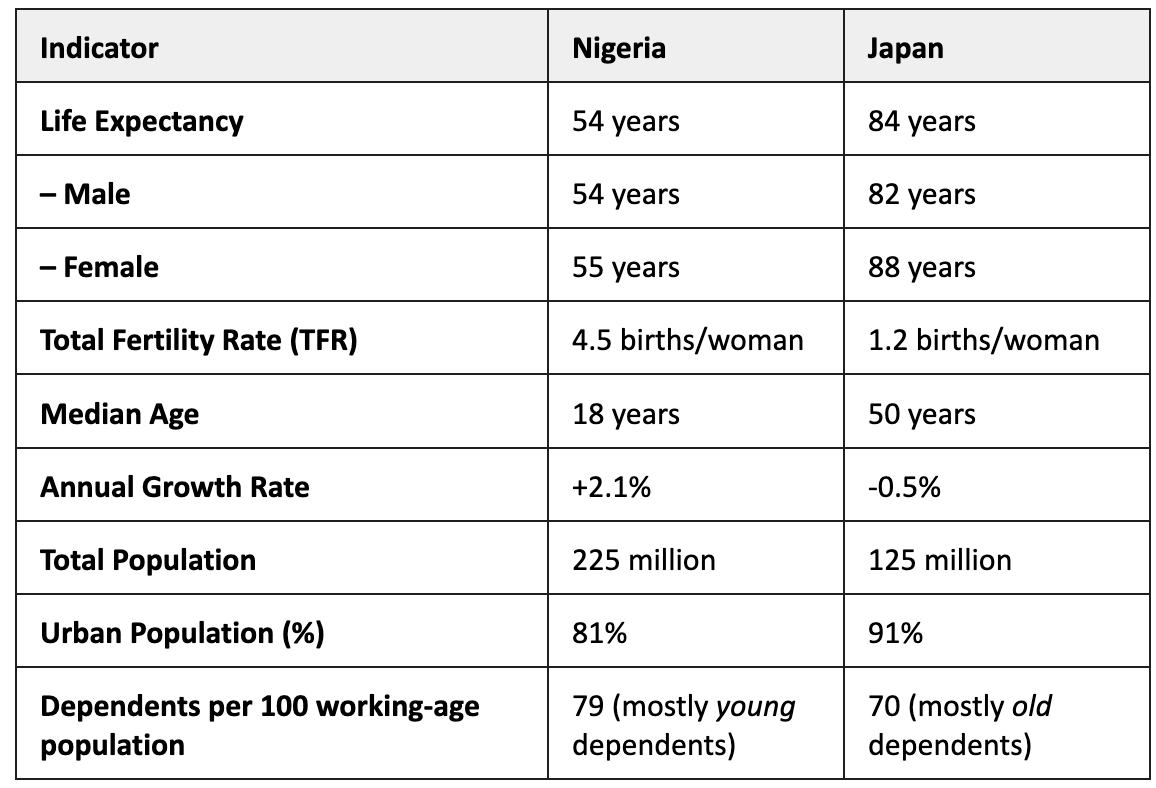
Source: UN World Population Prospects and World Bank database
Japan has a storied global presence as a leader in longevity. It is also home to Okinawa, a famous so-called “Blue Zone” - areas of the world where people live exceptionally long and healthy lives. It is an idea that is contested/debunked (turns out, people lie about their age among other things) and a title that is slipping for Okinawa. But did you know that there is quite a chasm between male and female life expectancy? Or that genetics may also play a role in longevity in unexpected ways? Or that a culture of fitness plays an important role not just for health but for social connection? Or (my favorite) that maybe the way one sits plays a role in longevity?
Drivers of life expectancy in Japan
Japan’s status as a global leader in longevity is frequently attributed to its culinary traditions. While true (and so delicious!), I also want to focus on a few other lesser-known aspects of longevity/high life expectancy in the country. There is a complex interplay of public health systems, cultural hygiene, communal fitness, and even genetic factors that discourage health-compromising behaviors.
Diet: The traditional Japanese diet, characterized by high intake of seafood, seaweed, and vegetables, has long been associated with lower rates of cardiovascular disease. Research indicates that specific dietary patterns, such as the frequent consumption of soy products, contribute to reduced mortality. However, this foundation is shaky. I mentioned Okinawa earlier - life expectancy rankings have recently fallen relative to other Japanese prefectures. This decline is largely attributed to the “westernization“ of local eating habits, including an increased reliance on fast food and higher fat intake, which highlights that longevity is as much a result of modern lifestyle choices as it is historical tradition.
Public Health and the Ningen Dock: Beyond nutrition, Japan’s public health infrastructure emphasizes early intervention through unique systems like the Ningen Dock. Unlike a standard physical health exam, the Ningen Dock is a comprehensive, preventive, and voluntary medical examination in Japan, scanning for diseases like cancer and lifestyle-related illnesses. It is often taken annually by individuals starting around age 30–40, and is frequently subsidized by employers or local governments. This system encourages proactive health management, allowing for the early detection of chronic conditions and cancers before they become untreatable. This preventative mindset extends into daily cultural practices. The use of oshibori (wet towels provided at meals) and a long-standing mask culture—which existed decades before the pandemic—serve as community-wide barriers against infectious diseases. These habits normalize hygiene as a collective responsibility rather than an individual choice, protecting the most vulnerable and also elderly populations.
Movement as a Social Ritual: Fitness in Japan is often integrated into the social fabric through Radio Taiso (radio calisthenics). Introduced in the 1920s, these low-impact, rhythmic exercises are broadcast daily by national networks. Radio Taiso is more than just physical activity; it is a community-building exercise often performed in parks, schools, and workplaces. It introduces a life course approach to fitness - seen with schoolchildren and elderly alike making this a part of their daily routines. I’m imagining tai chi that aunties and uncles do in the parks in the U.S., I’m going to need to know how accurate and pervasive this really is in Japan, anyone?
Social Cohesion and the “Moai”: The psychological component of longevity is deeply rooted in Japanese social structures. In regions like Okinawa, the concept of Moai—social support groups that provide emotional and financial assistance—has historically been a cornerstone of health. These networks ensure that individuals maintain a sense of purpose (ikigai) and belonging well into their 90s and 100s. However, as urbanization increases (reflect on the readings on Singapore and Papua New Guinea), these traditional support systems are facing new pressures, signaling a shift in how social cohesion may look for future generations.
The Genetic Guardrail: The Alcohol Flush: OK I thought this was a joke, but there may be something here. An overlooked driver of longevity may be a biological deterrent to heavy drinking. A significant portion of the Japanese population carries a variant of the ALDH2 gene, which causes a “flush” reaction—redness, nausea, and a rapid heartbeat—when consuming alcohol. While often viewed as a social inconvenience, this genetic trait may actually serve as a protective factor. The alcohol flush actually encourages stopping behavior. By making alcohol consumption physically uncomfortable for many, it has been shown to lower the population-level risk for alcohol-related liver disease and certain cancers.
Sex Differences in Life Expectancy
In Japan, the gap between female (88) and male (82) life expectancy is approximately 6 years, while the global average difference is about 5 years. This is attributed to several factors:
Behavioral Hazards: The gap is driven by a legacy of high-stress “salaryman“ work culture, historically higher smoking rates, and a significantly higher suicide rate among middle-aged males. For women, the emphasis on community-based social networks (often centered around neighborhoods and family) acts as a protection against the isolation that often shortens male lives. While smoking rates have fallen, the cohort effect continues to impact male mortality through increased risks of lung cancer and ischemic heart disease (See figure below.)
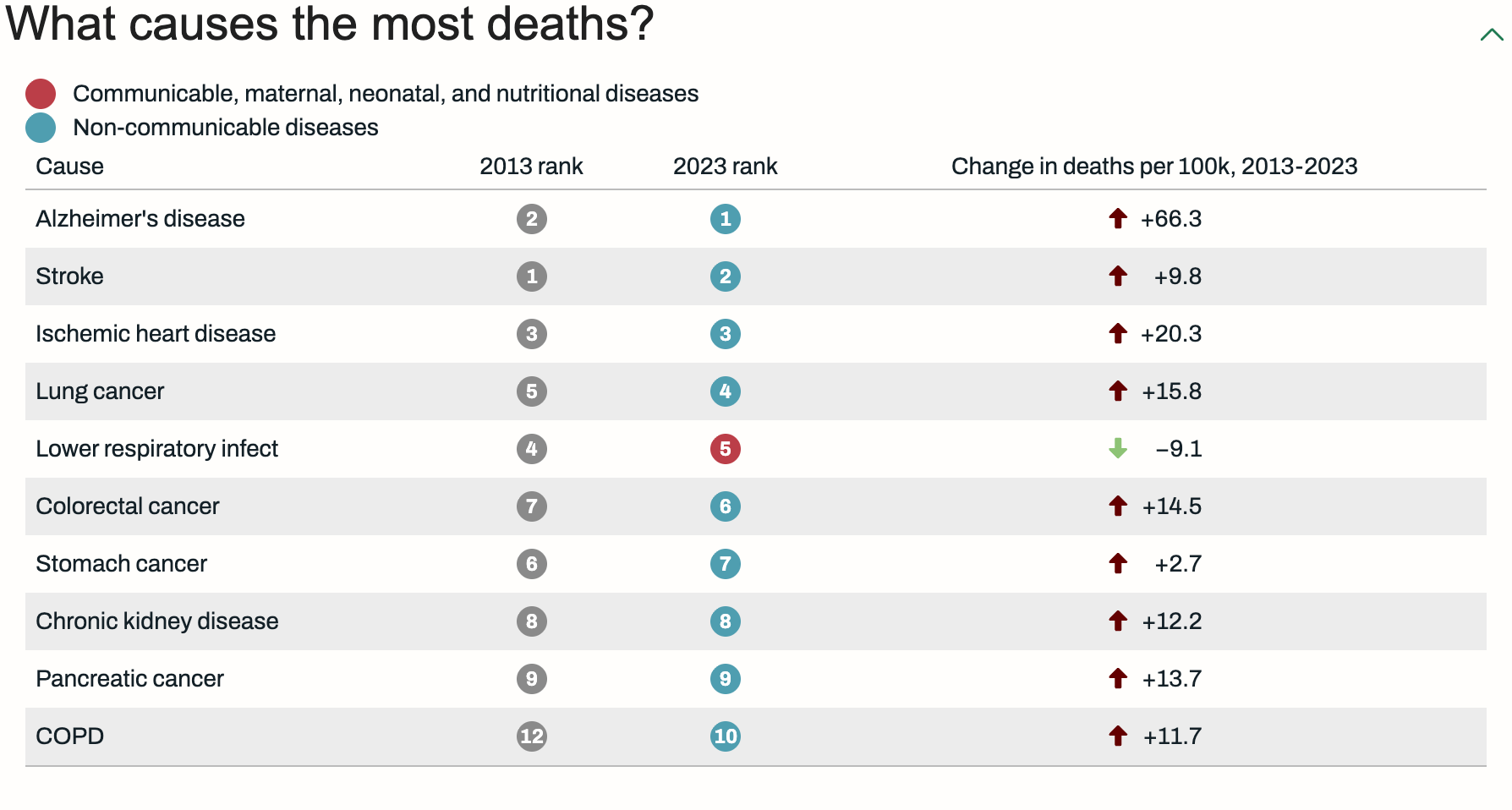
Source: Global Burden of Disease, Japan
Cardiovascular Health: Despite high smoking rates, Japan maintains a lower incidence of coronary heart disease than Western nations, a fact often attributed to traditional dietary habits and lower obesity rates. However, the sex differential in life expectancy in Japan continues to widen as mortality from cancer and external causes among men sees slower improvement relative to women.
The Consequences of Amazing Life Expectancy
There are a number of biological and behavioral reasons (explored already) as to why women tend to outlive men generally speaking. In Japan, women outnumber men 2.3 to 1 among those aged 85 and over. While this longevity is a success of public health, it has exposed deep-seated socioeconomic inequalities.
The Poverty Paradox of Elderly Women
While this longevity is a success of public health, it has exposed this hidden underbelly. I had no idea until this research, but a significant portion of Japan’s single elderly women live in relative poverty. While 65% of all citizens aged 60+ report being financially comfortable, single women aged 65 and older have a poverty rate of 44.1%, nearly four times that of their male counterparts.
The roots of this poverty lie in the post-war Japanese pension system, which was built on the assumption of a male-breadwinner household model which systematically marginalized female labor. Until the 1985 Equal Employment Opportunity Act, corporate norms often forced women to retire upon marriage, resulting in significantly shorter career spans and lower pension contributions. This was compounded by the 1985 “Category 3” reform, which, while providing a basic safety net for housewives, effectively penalized women for seeking higher-paying careers by tied their tax and pension benefits to a low-income dependent status. Consequently, many women spent their lives as “disguised housewives” or non-regular workers, leaving them with an average monthly pension of just ¥109,314—nearly 40% less than their male counterparts—a deficit that proves devastating as they outlive their husbands and navigate old age in isolation.
This economic precariousness suggests that while Japan has mastered the biological gain of long life, it has yet to modernize the utility of those extra years for women, leaving a massive demographic cohort to navigate a 21st-century lifespan with outdated financial tools.
Living long vs. Living long and healthy
While Japan remains a global leader in longevity, the conversation has shifted from simply living longer to living well. This distinction is captured in the concept of Healthy Life Expectancy (HALE)—the period an individual lives without significant disability or the need for nursing care. As the gap between total years and healthy years widens, it creates profound socio-economic pressures that are reshaping Japanese society.
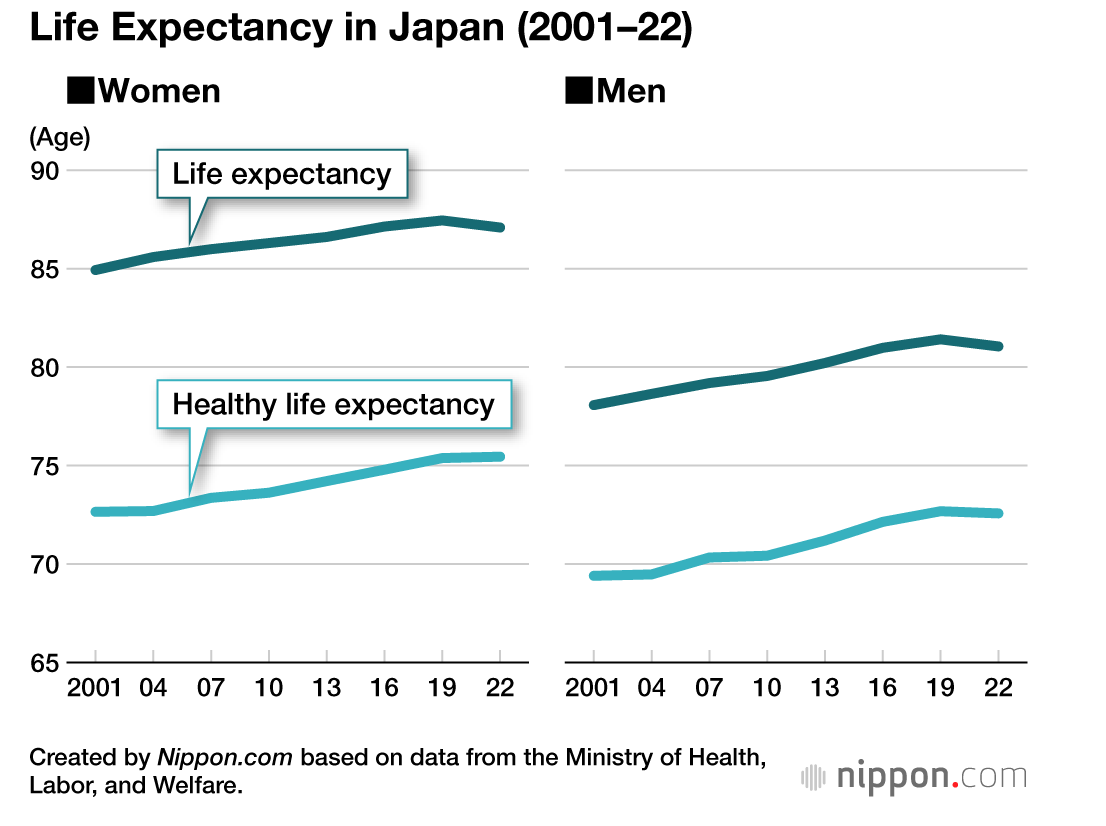
In this case, there is a persistent health gap in Japan. On average, women can expect to live roughly 11.6 years in imperfect health, while for men, the gap is about 8.5 years. This could be related to the poverty paradox I mentioned above, with fewer resources to manage health and related factors. This means a significant portion of the long life is actually spent managing chronic illness or cognitive decline. Recent data also reveals a growing geographic divide. While central prefectures like Shizuoka boast some of the highest healthy life expectancies, northern regions like Iwate lag behind. This regional inequality is often linked to differences in local public health initiatives, climate, and access to the Ningen Dock screening culture mentioned previously.
The Sandwich Generation
The demographic shift has created a unique pressure point for middle-aged adults, particularly women, known as the Sandwich Generation, which my friend (demographer extraordinaire), Toshiko Kaneda, calls the further squeezed Panini Generation instead.) These individuals find themselves simultaneously caring for aging parents and their own children. While it is a phenomenon that has existed for a long time, this version is still a heightened, modern one due to longer lifespans, delayed childbearing, and economic pressures. Increased longevity means parents need care for longer, while later parenthood puts middle-aged adults in the squeeze sooner. This is not only found in Japan of course; many of you are likely nodding along as you read elsewhere in the world.
Gendered Burden: Research from the Lee Kuan Yew School of Public Policy highlights that while both genders are affected, women bear the brunt of the physical and emotional labor. This dual burden often leads to lower marital satisfaction and increased mental health risks.
The Squeeze: Unlike previous generations where large families shared the care load, today’s smaller family units mean the responsibility is concentrated. This often forces women to choose between their careers and caregiving, further impacting the labor market (and future pensions?)
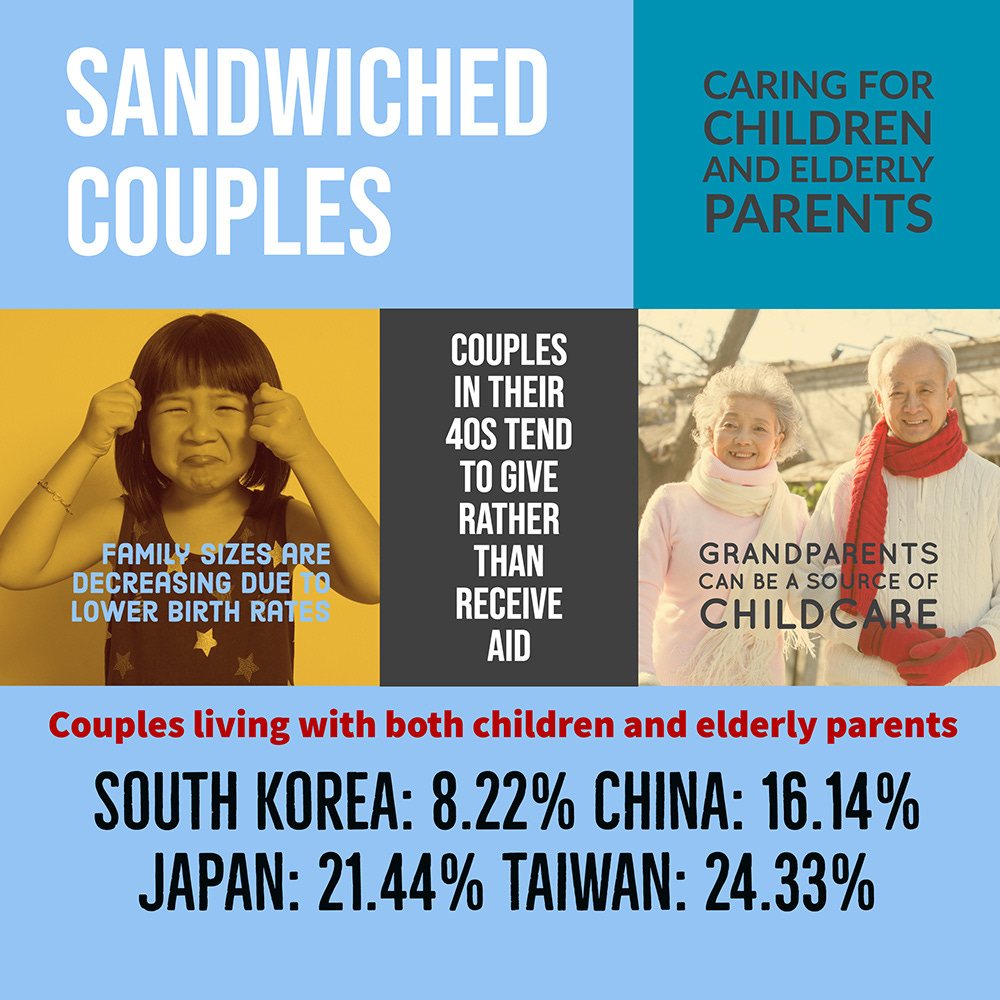
Source: Lee Kuan Yew School of Public Policy
The Silver Economy
Japan’s economic strategy has pivoted to the Silver Economy—an ecosystem of products and services designed for the over-50 demographic. This is a stark contrast to emerging markets like Nigeria, which is projected to grow nearly three times faster than Japan in 2026 due to its youthful demographic dividend. While Nigeria’s growth is driven by a massive entry of young people into the workforce, Japan’s growth (projected at a modest 0.7%) is driven by catering to the wealthy elderly. The Silver Economy isn’t just about healthcare and robotics; it extends into entertainment and lifestyle. Seniors in Japan hold a significant portion of the country’s private wealth, driving demand for specialized travel, active aging tech, and even niche media markets. A notable example of the latter is the booming silver porn industry. As the taboo around elderly sexuality fades, this sector has seen a surge in demand, catering to a demographic that remains active and possesses the disposable income to sustain such niche markets.
Eat your fish and soybeans, but also, call your friends and family etc.
Japan’s reality today is a peek into a future many nations will eventually inhabit. But if there is one thing this demographic deep-dive shows, it’s that the Japanese miracle of longevity is complicated. While we can—and should—admire the cultural cohesion of Radio Taiso and the longevity-boosting power of a soy-rich diet, we have to look at the utility of those extra years, especially for women. When we achieve something as socially desirable as longevity, it seems as though we also find ourselves facing a new army of challenges. In Japan, we’re seeing that a system designed for a rigid, 20th-century male-breadwinner model doesn’t know what to do with millions of women who outlive that model by decades. If a woman lives to 90 but spends the last 15 years in poverty or chronic illness because the policy didn’t keep up with her biology, does that gain feel like a win? As the country pivots toward a Silver Economy, the challenge shifts from merely extending the lifespan to ensuring those years are actually usable. This means moving beyond just social connection as a personal habit and treating it as a policy priority.
The Food!
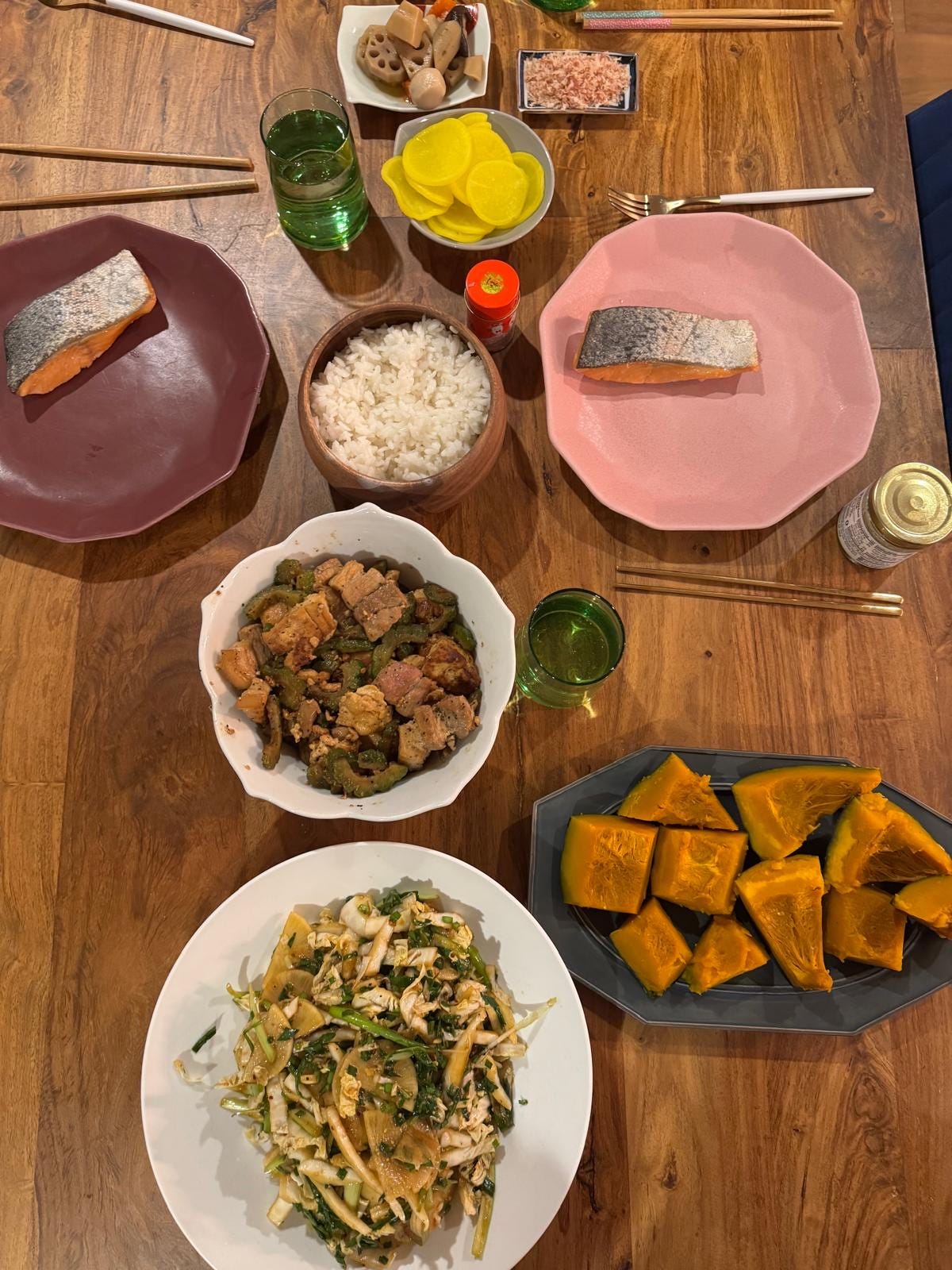
We had to be basic and incorporate food from Okinawa into our meal. The star was our fish - Shiozake which is fish cured with sake and salt. This is something that is generally in a weekly rotation in our house because everyone loves it, so we had to make it. We added Okinawan goya champuru (bittermelon stir fry) and kabocha squash on the side, pickled veggies (storebought), yuzu koshu (the best condiment ever), and a salad. The kids didn’t do any research (this week has been crazy), but we listened to a 80/90s Japanese City Pop playlist on Spotify and talked about internment camps.
Thank you for this very interesting analysis. After reading it, I looked into Japan's political structure, the parliament and female representatives. The issue of women outliving men in a male 'dominated' society does have dangerous consequences and requires some policy changes.
Wow! Very insightful piece. I enjoyed reading this and thinking through your points.