I realize I shot myself in the foot a little bit by trying to pair a country that is the most populous (India, last week), with its opposite this week. But what is the opposite of “most populous”? Is it the “least populous”? And if so what does that mean? The “least dense”? “Losing population precipitously”? (No, that’s a rate of change, and a topic for another week!)
To find the right mirror for India, I looked for its demographic shadow. If India is one of the world’s mega states, then Guyana is perhaps a new mini giant. A nation with the recent footprint of a titan in growth and wealth, but with a tiny population. Landing on Guyana was perfect: it is one of the least densely populated countries on Earth, yet it is currently undergoing massive changes to its very identity.
Guyana is considered part of the Latin America and the Caribbean (LAC) region although it geographically sits in South America (bewildering). The LAC region is undergoing a faster-than-expected demographic transition, with its total population reaching 663 million in 2024—nearly 4% lower than forecasts from two decades ago. It is experiencing a sharp decline in fertility rates to below-replacement levels and an accelerated aging process, with the median age jumping from 18 in 1950 to 31 today, and projected to reach 40 by 2050. While the broader region is aging rapidly (with a median age projected to reach 40 by 2050), Guyana sits in a relative sweet spot with a median age of just 26 years. It has the youth, but as we’ll see, it doesn’t have the numbers to support its own explosion. Read on to find out.
The Caste Connection
First, the main reason I was excited to dive into Guyana was the connection to last week’s focus on caste. Following the abolition of slavery in the British West Indies, the colonizers needed a new, reliable source of labor to maintain the prosperity of the sugar industry. This formed the formal beginning of the Indian indenture system in 1838, when the first groups of laborers arrived in British Guyana. Between 1838 and 1917, approximately 238,909 Indian immigrants landed in Guyana, mostly recruited from the North-West. The voyage, often referred to as crossing the kala pani (black water) was grueling and dehumanizing; overcrowded ships and inadequate food led to high mortality rates. Despite these conditions, the shared trauma of the voyage fostered deep bonds among jehazis (shipmates), which became a foundational element of Indo-Guyanese social structure.
While indentured laborers were contractually promised a subsidized return passage to India after five or ten years, only about one-third of the workers eventually returned. Social marginalization, specifically the caste system, played a significant role in this decision. In India, the rigid caste hierarchy dictated every aspect of life, but the plantation environment in Guyana did not allow for the reproduction of these hierarchies (!!!) Here, laborers of all castes were forced to live, work, and eat together, effectively eroding the traditional power of the upper castes. Consequently, individuals from the lowest castes were significantly less likely to return to India, as the “unfreedoms” of the indenture system were often deemed preferable to the systemic oppression of the caste system they had left behind. Today, about 40% of Guyanese are of East Indian origin, 30% Black, 20% multiracial, and 10% Amerindian. Unlike in India, where caste remains a primary lens for nearly everything, in Guyana, the Indo-Guyanese identity has hybridized, often finding more in common with Afro-Guyanese neighbors in the diaspora than with the rigid social codes of the distant motherland.
The contrast between India and Guyana is more than just a difference in population numbers and the erasure of caste; it is a mirror image of the Global South’s demographic and economic possibilities. While India maneuvers with the weight of its 1.4 billion people, Guyana is navigating a sudden, tidal wave of wealth that is reshaping its very identity, and directly tied to demography.
The newest petrostate, economy, and immigration
To start from the beginning - until fairly recently, there was more migration out of Guyana than to Guyana.
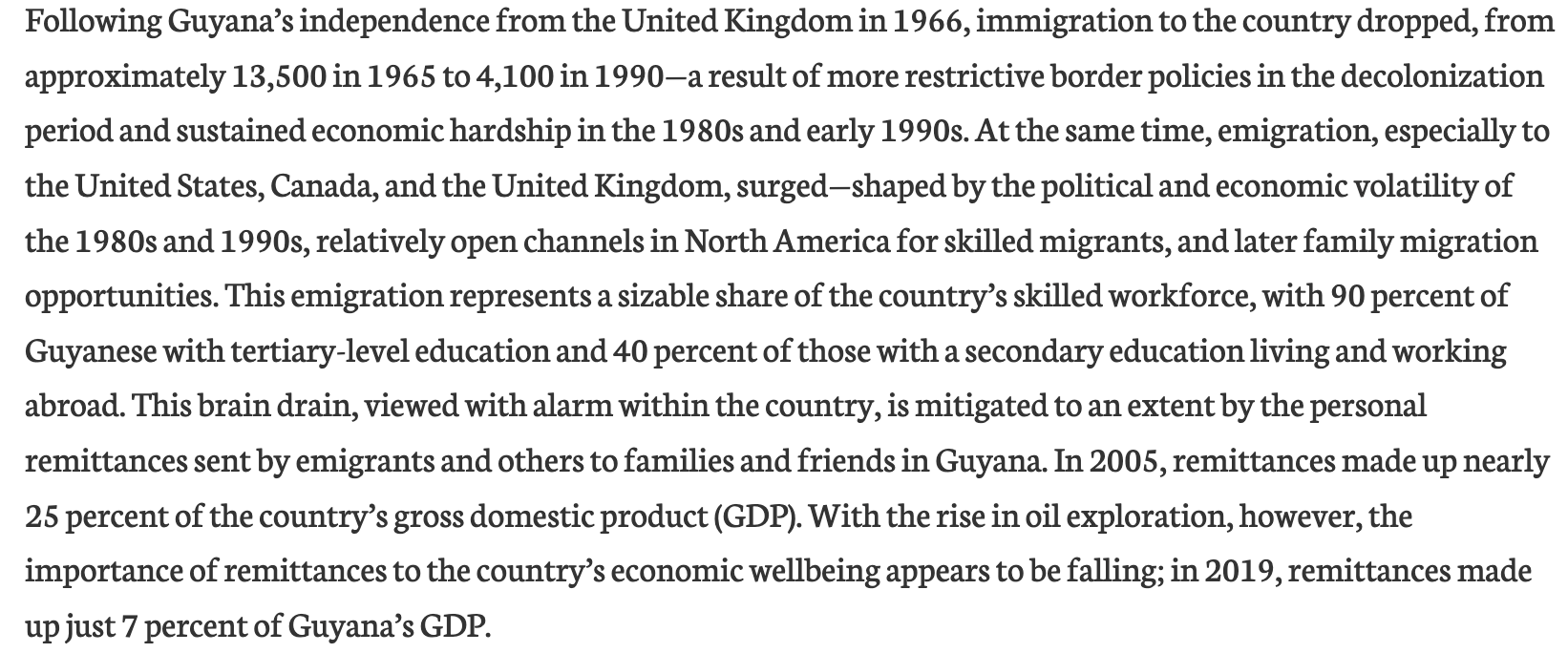
Source: Migration Policy Institute
In 2015, that changed. Vast reserves of oil were discovered offshore which basically turned the economy upside down overnight. 5 years later, it was reported that while most countries experienced massive economic losses (it was 2020, COVID-19 was rampaging globally), Guyana’s economy boomed. Real GDP growth was a whopping 44%, a direct result of major discoveries in the oil and gas sector and indirect impacts on other sectors such as tourism and manufacturing. It is still the fastest growing economy in the world.
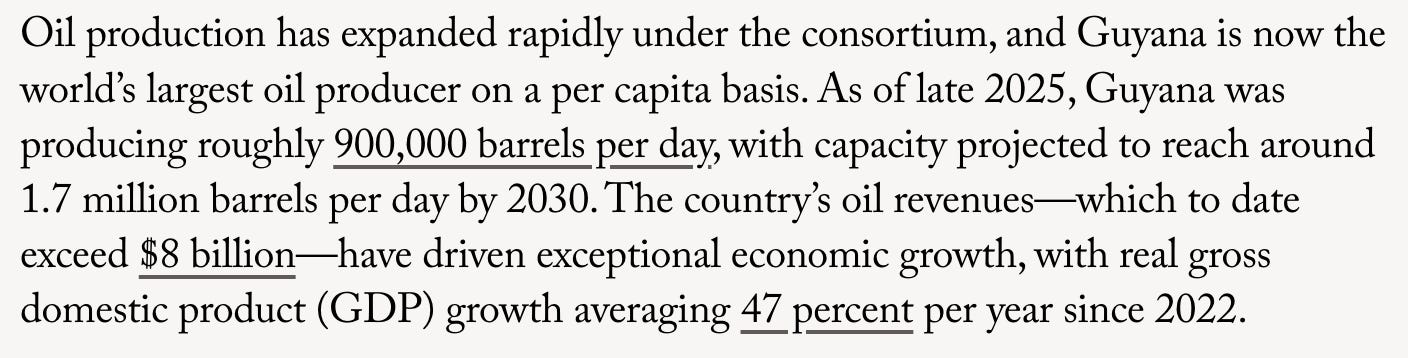
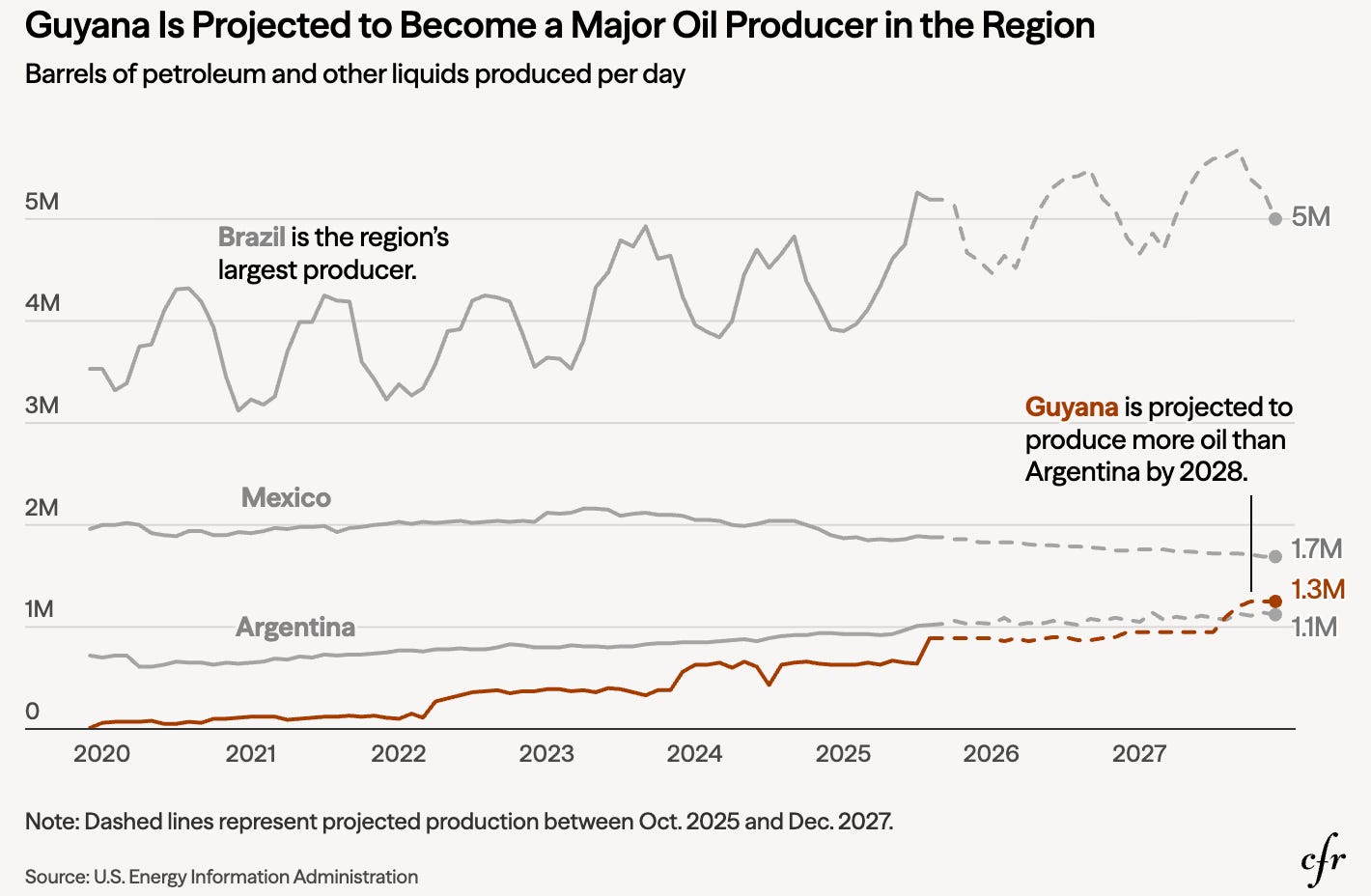
Source: Council on Foreign Relations
For context - the 2025 GDP growth in India (considered an economic superpower) was 7.4% - normally admirable, but in relation to Guyana - a puny amount. The US? 2.2%.
For the first time in decades, Guyana is seeking to retain skilled citizens, and also attract migrants. On the latter point, research suggests that to sustain its economic growth, Guyana is estimated to need at least 160,000 additional workers. Even if the country were to harness all unemployed, underemployed, and discouraged Guyanese workers, domestic supply would only amount to 63,500 workers. As a result, the International Organization for Migration (IOM) estimates that Guyana will need to attract, at a minimum, 100,000 workers to realize its full growth potential. This is particularly salient given Guyana’s loss of most of its skilled workforce I mentioned earlier. Most migrants to Guyana come from the Caribbean region, with many from Venezuela (accounting for about 3% of the population), mostly working in the informal sector and lacking social protections.
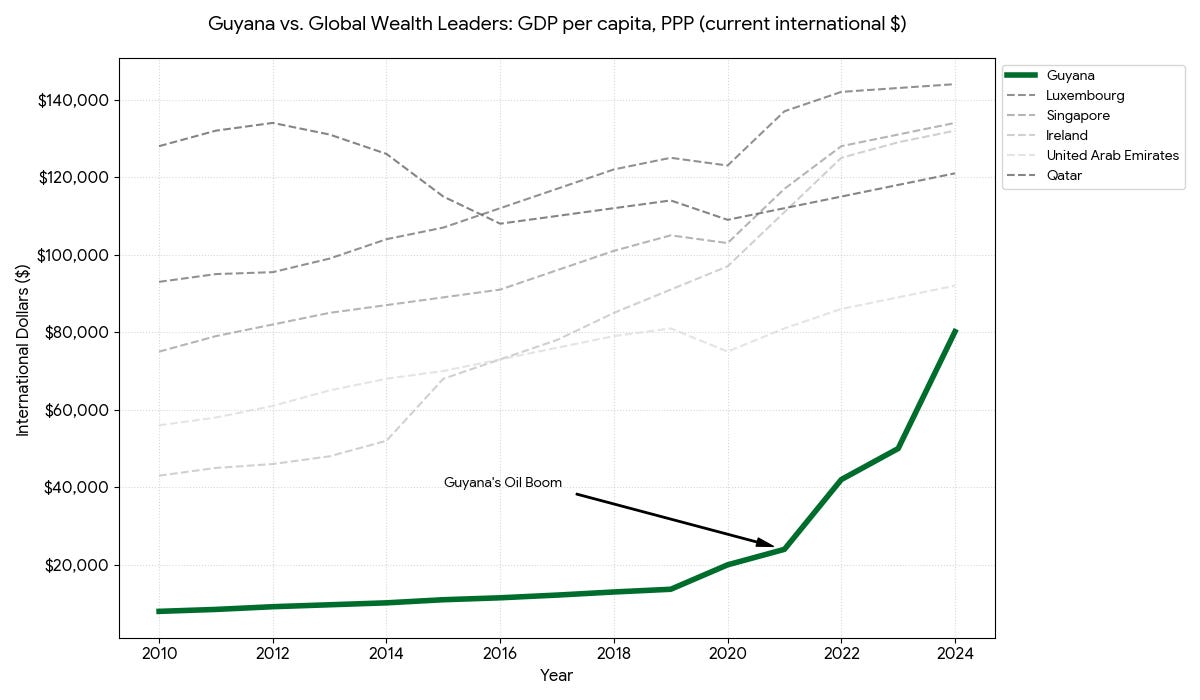
There has been massive investment (and promise of investment) for the Guyanese people thanks to the oil boom. Prior to 2015, the majority of Guyana’s population lived in poverty for decades. While poverty still lingers, (more soon), this graph made my jaw drop, so had to share:
Source: Data from the World Bank
The wealth (and trend) is staggering—The current GDP per capita, PPP is around $80,000, trailing only giants like Singapore and Luxembourg. Yet, a recent Inter-American Development Bank report revealed a jarring paradox: despite the boom, over 50% of the population still lives in poverty, with 30% in extreme poverty. This poverty is overwhelmingly rural, creating a two-tiered society where oil wealth is visible on the coast but absent in the hinterlands. While oil revenues have transformed government budgets and attracted international investment, the benefits have yet to lift a substantial portion of the population out of poverty. To ameliorate this, the government launched an ambitious social spending program. From the Caribbean Council, these take a few different forms:
Direct Cash Transfers & Income Support
One-time Cash Grant: Every household in Guyana (approx. 264,000) will receive a one-time grant of GY$200,000 (nearly US$1,000). The government chose direct cash over tax breaks to ensure the benefits reach citizens directly.
Minimum Wage Increase: The public sector minimum wage will rise from GY$70,000 to GY$100,000 per month (approximately US$500).
Education & Healthcare
Free University Education: Starting in January 2025, tuition fees at the University of Guyana were completely abolished. This fulfilled a campaign promise and is expected to benefit roughly 11,000 students.
Universal Health Voucher: Every child in Guyana started receiving a GY$10,000 (approx. US$50) voucher in 2025 (set to be delivered annually). This voucher is intended to cover basic health tests and preventative care for non-communicable diseases.
Support for Retirees & Infrastructure
NIS Injection: The government is committing GY$10 billion (US$47 million) to the National Insurance Scheme (NIS) to help retirees who did not meet the full contribution requirements for benefits.
Electricity Costs: There was a goal to reduce electricity costs for citizens by 50% by the end of 2025 (which has not happened yet.)
Impact of all this spending
For decades, as one of the poorest nations in South America, the country faced a landscape of severe scarcity. Before the oil boom, the healthcare system was defined by high maternal and infant mortality rates that were among the most sobering in the western hemisphere. In 2015, the Maternal Mortality Rate (MMR) was approximately 121 per 100,000 live births and the Infant Mortality Rate stood at 30 per 1,000 live births. A double burden of disease plagued the population: while clinicians fought persistent tropical and infectious diseases like malaria and HIV, they were simultaneously seeing a surge in non-communicable diseases (NCDs) like heart disease and diabetes, which became the leading causes of death by the early 2010s. For the average citizen, specialized care—such as oncology or advanced cardiology—was a luxury that often required expensive medical flight to other countries if they could afford it.
The discovery of vast offshore oil reserves in 2015, acted as a massive shock to the economy and impacted health. It allowed the government to pivot from a defensive health strategy to an offensive one. Almost overnight, Guyana transitioned to a “High-Income” classification with the fiscal power to astronomically increase capital expenditure on public health facilities continuing to this year.
In this new era, the narrative has shifted toward massive infrastructure and digital modernization. The government is now funding several new regional hospitals and a national pediatric and maternal hospital to bridge the gap in specialty care. Perhaps most impressively, Guyana is using technology to overcome its geography; a national telemedicine initiative now connects indigenous communities in the remote hinterland with specialists in Georgetown, ensuring that oil wealth reaches beyond the coastal capital. These investments are showing early results: by 2023, the MMR dropped to 75 per 100,000 live births, a near 50% reduction from 2010 levels.
It’s not all roses; life expectancy, though rising, sits at approximately 70 years, still lagging behind regional peers by about 5 years. The country also faces a significant brain drain, as its highly trained nurses and doctors are frequently recruited by wealthier nations, a challenge the government is attempting to counter with a massive hybrid nursing program involving hundreds of students.
Climate impact and a whole new city
Guyana is about 85% covered in rainforest, and has long been referred to as a carbon sink, rather than being a net emitter like most countries. Protecting its rainforest has also been profitable for Guyana, earning it hundreds of millions of dollars through a groundbreaking agreement with Norway in 2009, along with several subsequent deals to sell carbon credits. Guyana also boasts one of the world’s largest virgin forests, which allows it to keep describing itself as net-zero despite rapidly growing oil production described above. For centuries, Guyana has been a nation defined by its coastline; today, approximately 90% of the population lives on a narrow coastal strip that sits between one and two meters below sea level. Protected only by a 17th-century Dutch seawall and an aging network of “kokers” (sluice gates), this region is increasingly defenseless against the rising Atlantic. As climate change accelerates sea-level rise and intensifies seasonal flooding, the coastal plain—once the heart of the nation’s agriculture and commerce—has become its greatest geographic risk.
A new city, called “Silica City” is the government’s strategic answer to this existential threat. The project is designed as Guyana’s first smart city and a premier urban model for climate adaptation. By moving inland to higher, sandy terrain, the city offers a safe haven for a population that can no longer rely on the shoreline. This is not merely an expansion, but a strategic retreat into the interior, aimed at easing the immense population pressure on Georgetown and the vulnerable coastal zone.
The vision for the city goes beyond simple relocation; it is intended to be a fully sustainable and technologically advanced urban center. The master plan incorporates renewable energy, smart waste management, and sustainable building materials, positioning it as a blueprint for how a developing nation can leapfrog traditional, carbon-heavy urban sprawl. By integrating high-tech infrastructure with the natural environment, Silica City seeks to balance Guyana’s newfound oil wealth with its ambitious net-zero goals and its commitment to maintaining one of the world’s highest rates of forest cover.
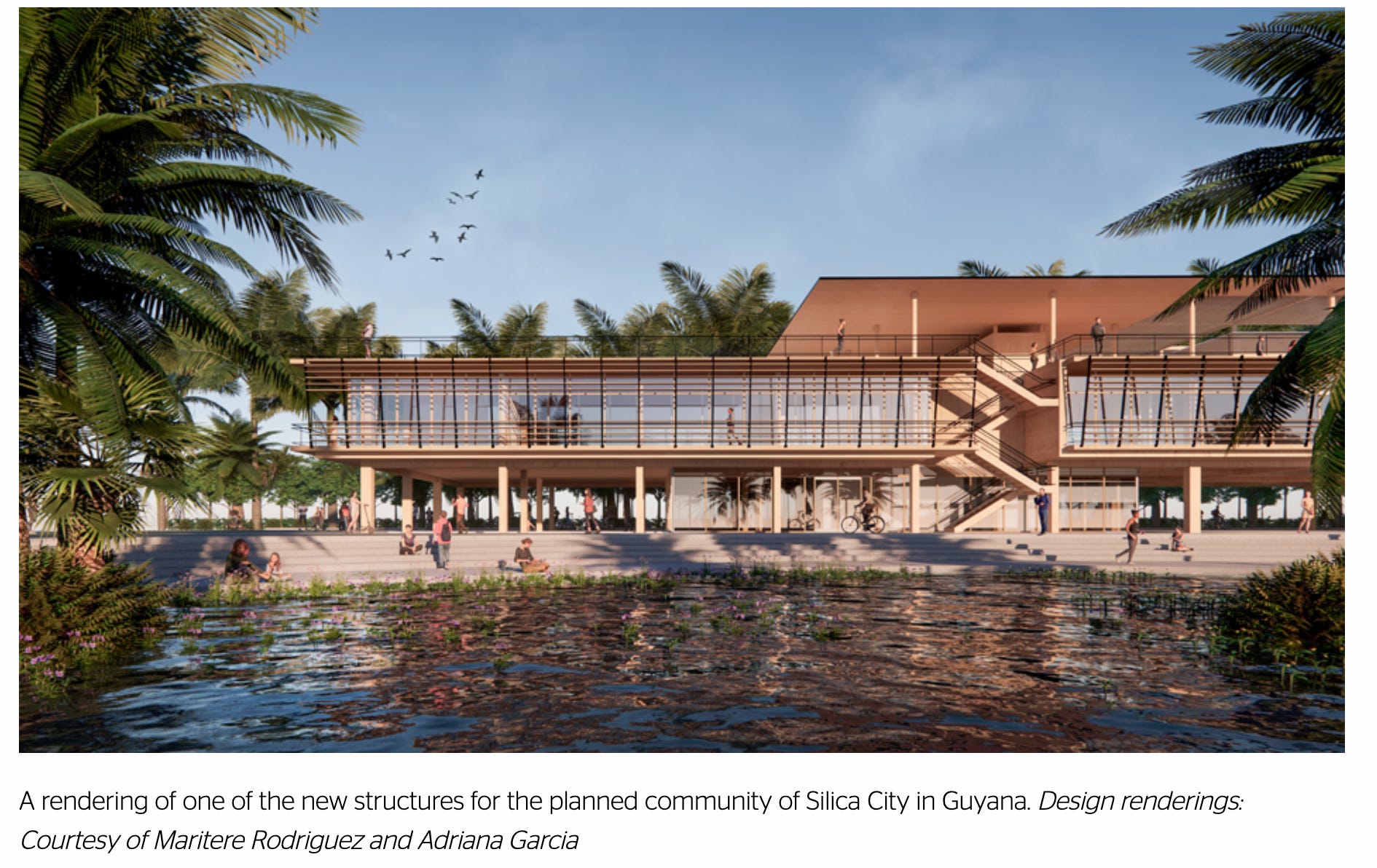
Source: University of Miami, a partner in creating Silica City.
Ultimately, Silica City is the centerpiece of a new Guyanese narrative: one that acknowledges the country is at the front lines of climate change even as it becomes a global energy powerhouse. It represents a pivot from a precarious coastal existence to a secure, inland future, transforming a demographic necessity into a global model for resilient, sustainable urban living.
However, the narrative of a climate-resilient utopia is increasingly being challenged by a counter-narrative of systemic opacity and equity. While the government promotes a high-tech future of renewable energy and net-zero living, critics argue that the project’s foundation is built on a dangerous erosion of accountability, political favoritism, and secret financing.
Some caution
While the headlines focus on record-breaking GDP, the underlying narrative is cautioned by the “resource curse,” a shadow that has historically followed oil-rich developing nations. There is a deep-seated fear that without radical institutional transparency, the country could succumb to the instability and corruption seen in other major producers, where wealth often bypasses the most vulnerable and concentrates at the top.
This risk of inequality is particularly acute for those on the socioeconomic periphery. Despite Guyana’s reclassification as a high-income country, a significant portion of the population—including indigenous groups and the growing migrant community—struggles with basic food security and barriers to healthcare. There is a growing concern that the oil boom could exacerbate shadow industries already present in the country’s mining and forestry sectors. Human-rights activists warn that without modernized, ethical labor protections, the influx of new economic activity may intensify the risks of human trafficking and labor exploitation, particularly among women and rural youth.
Perhaps the most daunting caution is the Climate-Oil Paradox. Guyana is essentially using the extraction of fossil fuels to fund its defense against the very rising tides those fuels accelerate. With the vast majority of the population clustered on a coastal strip that sits below sea level, the country is on the front lines of an existential crisis. Georgetown is frequently cited by researchers as a city that could be largely underwater by 2030, and recent floods have already displaced tens of thousands of households.
The government’s plan to use oil revenues to build a green economy and fund the inland retreat to Silica City is a race against time. The ultimate caution is whether these mitigation efforts can outpace the climate impacts already being felt, or if the country’s newfound prosperity will be undermined by the physical displacement of its people. Ultimately, the narrative for Guyana is a high-stakes gamble: it is a nation attempting to leverage its greatest environmental liability—oil—into its only means of geographic survival.
Of mega states and mini giants
Ultimately, pairing India with Guyana reveals a profound truth about the Global South in the 2020s: whether you are a mega state or mini giant, demographic nuances are critical to development. India’s challenge is the sheer gravity of its 1.4 billion people—a massive, slow-moving ship that requires immense coordination to turn. Guyana, by contrast, is a sleek speedboat suddenly equipped with a high-powered engine; it has the velocity to leapfrog decades of development, but it risks capsizing if its institutions can’t keep pace with its speed. Whether it becomes a global model for climate adaptation or a cautionary tale of the “resource curse” depends entirely on whether that speedboat is steered by the hands of the many, or the interests of a few.
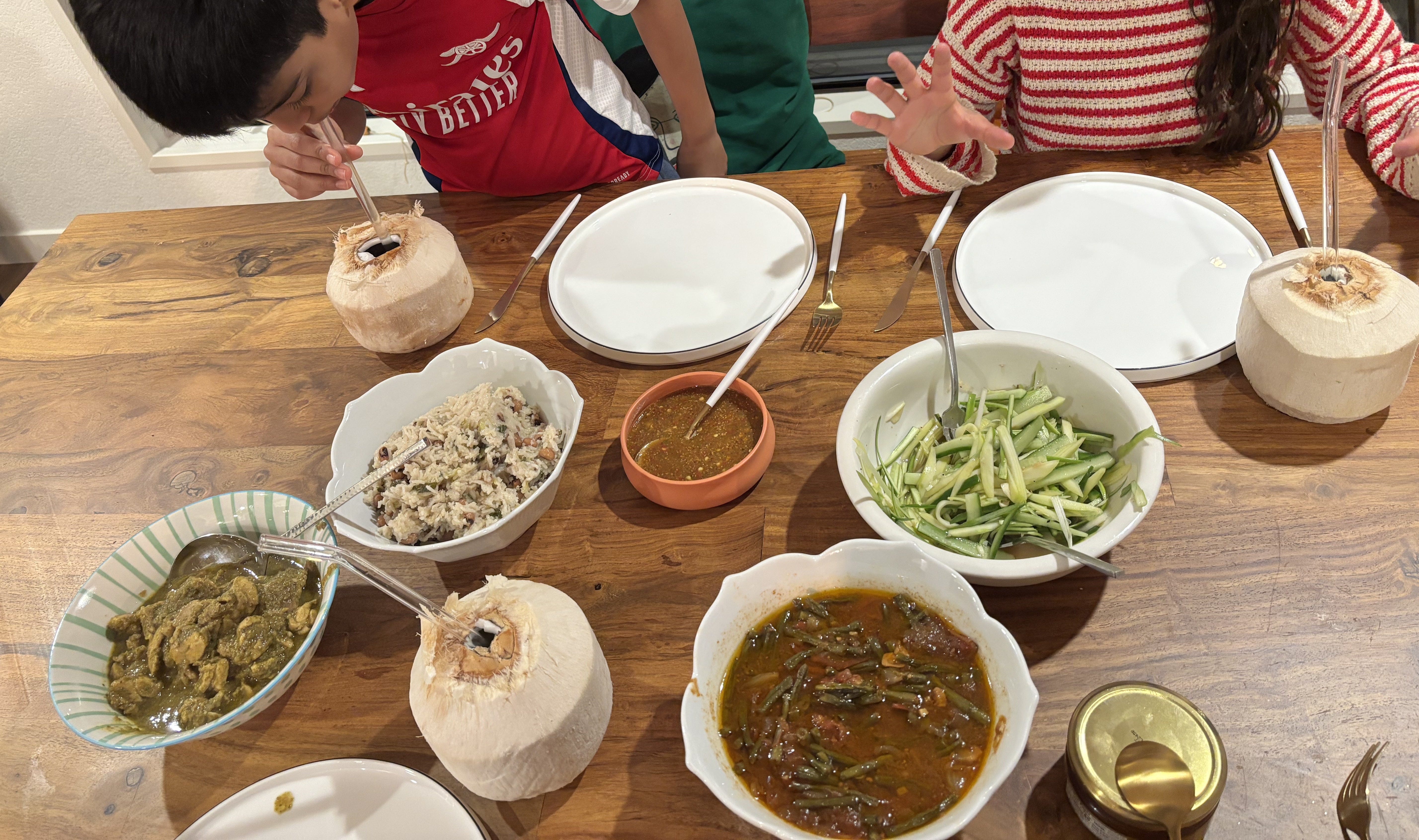
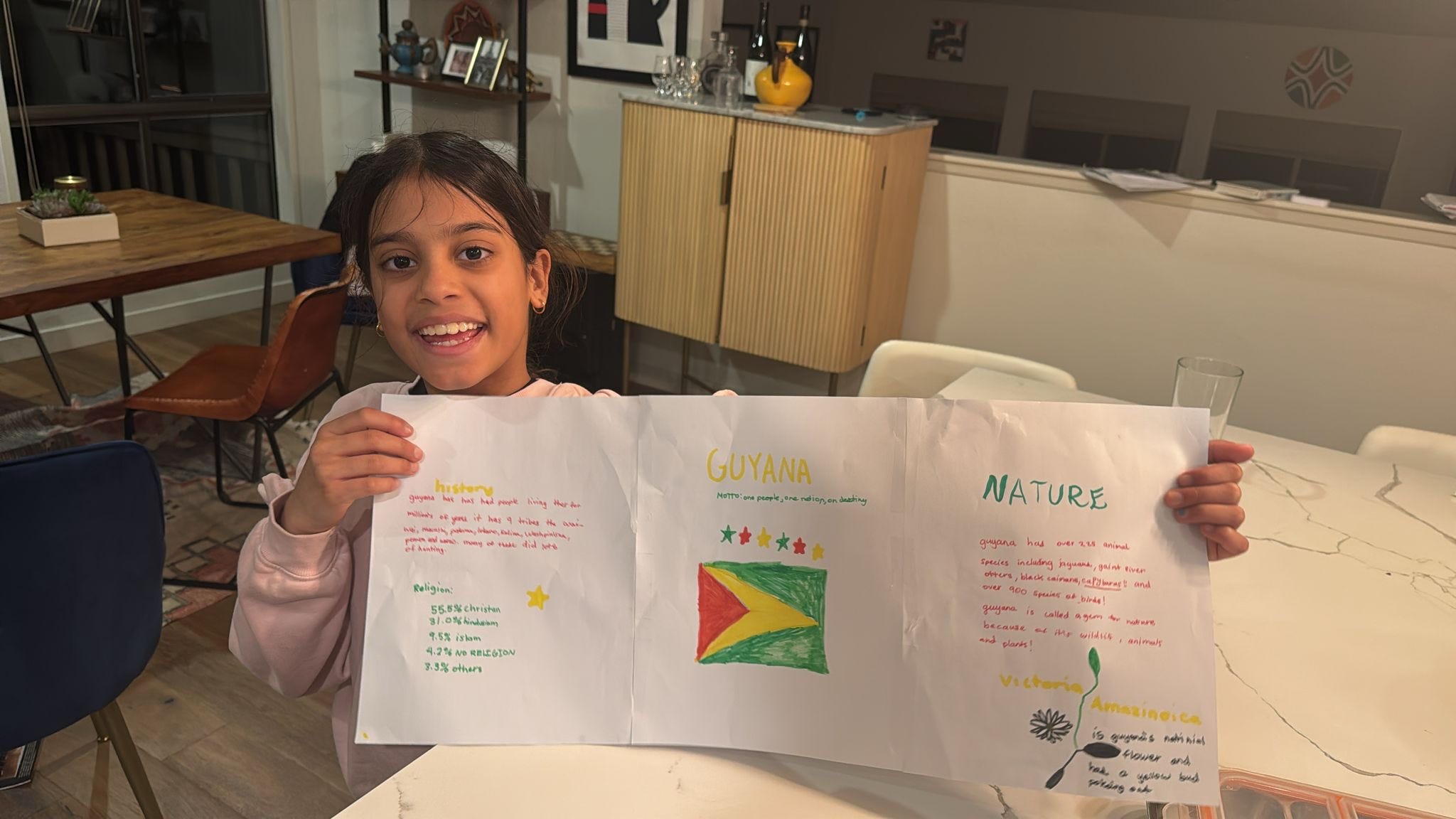
The Food!
We made Guyanese chicken curry with rice and peas. We also had Bora on the side, and drizzled everything with a spicier than expected (I put in 5 habaneros, so what was I expecting really?) pepper sauce. The kids are back on track - Eymir did research on the religious and ethnic makeup of the population, and Kimaya told us all about nature and capybaras. Of COURSE we listened to chutney-soca music, delighted in the Hindi bits, and Ekim found a new genre for a very specific mood. We were all battling a winter illness, so it did not make for the most focused picture.