

If you haven’t paid attention to anything population-related ever, you probably still subconsciously consumed the news of India overtaking China to become the world’s most populous country in 2023. The implications of this are massive, and have been written about ad nauseum in popular media, as they should. One glaring omission in most coverage is who the 1.4 billion represent, and who gets left behind in the story about India’s economic success. While macro-level narratives often celebrate India’s youth bulge and the demographic dividend (DD), (will India reach its full potential DD or not?), a granular investigation into the health, education, and economic outcomes of the population reveals a persistent structural divergence based on caste. That’s what I will focus on today - the caste breakdown in India and why that matters. For the most populous country in the world determining how it can reap the DD and when, equity and representation matter.
Let’s start with the birds-eye view: India’s demographic complexity is beautifully articulated in Rukmini S’s three-part series for CASI (My intellectual home on India during my doctorate) here, here, and here. In summary: India’s demographic transition is rather complex, and she argues that the country has moved past the population explosion era into a period defined by plunging fertility and a rapidly closing window for its demographic dividend. Her analysis highlights six major milestones—including India becoming the world’s most populous nation and its total fertility rate (TFR) falling below the replacement level of 2.1—while emphasizing that these shifts are occurring with a significant generation gap between the aging southern and western states and the still-growing northern and eastern regions. These divergent trajectories are fueling intense political and economic friction over the redistribution of tax revenues and the future of parliamentary representation, particularly as southern states fear being penalized for their developmental success. Ultimately, the series suggests that India must shift its focus to managing the challenges of an aging society, labor migration, and the social implications of a shrinking workforce to ensure long-term stability and growth.
The Caste System
The 1.4 billion represent thousands of castes and sub-castes, at least 6 major religions; each struggling to achieve a piece of the Indian dream. The caste system continues to function as a rigid architectural framework for Indian society, evolving from a social hierarchy rooted in religious texts into a resilient form of ethnic and political identity. Despite being outlawed, its influence persists. Over 90% of marriages remain within caste lines (making my parents’ inter-caste marriage in the 1970s even more spectacular! And my father wrote all about our family in case you want to read further.) Research has found that while attitudes on inter-caste marriages in India are slowly changing, that has not caught up in the diaspora where parents raise children in mindsets frozen in time from when they migrated. This suggests the diaspora’s focus on maintaining cultural identity as they live abroad in places where they have minority status. Despite a form of affirmative action (called reservations) being prevalent in the public sector for education and jobs, the implementation leaves much to be desired and its effectiveness is hotly debated. In the private sector, caste networks dominate, often bypassing merit for kinship.
While urbanization has offered a degree of anonymity, discrimination has simply moved from overt untouchability to systemic exclusion in housing, higher education, and hiring to name a few. Ultimately, caste remains the primary lens through which political mobilization and resource distribution occur, proving that legal abolition has not yet dismantled the deep-seated hierarchy that dictates the life chances of millions.
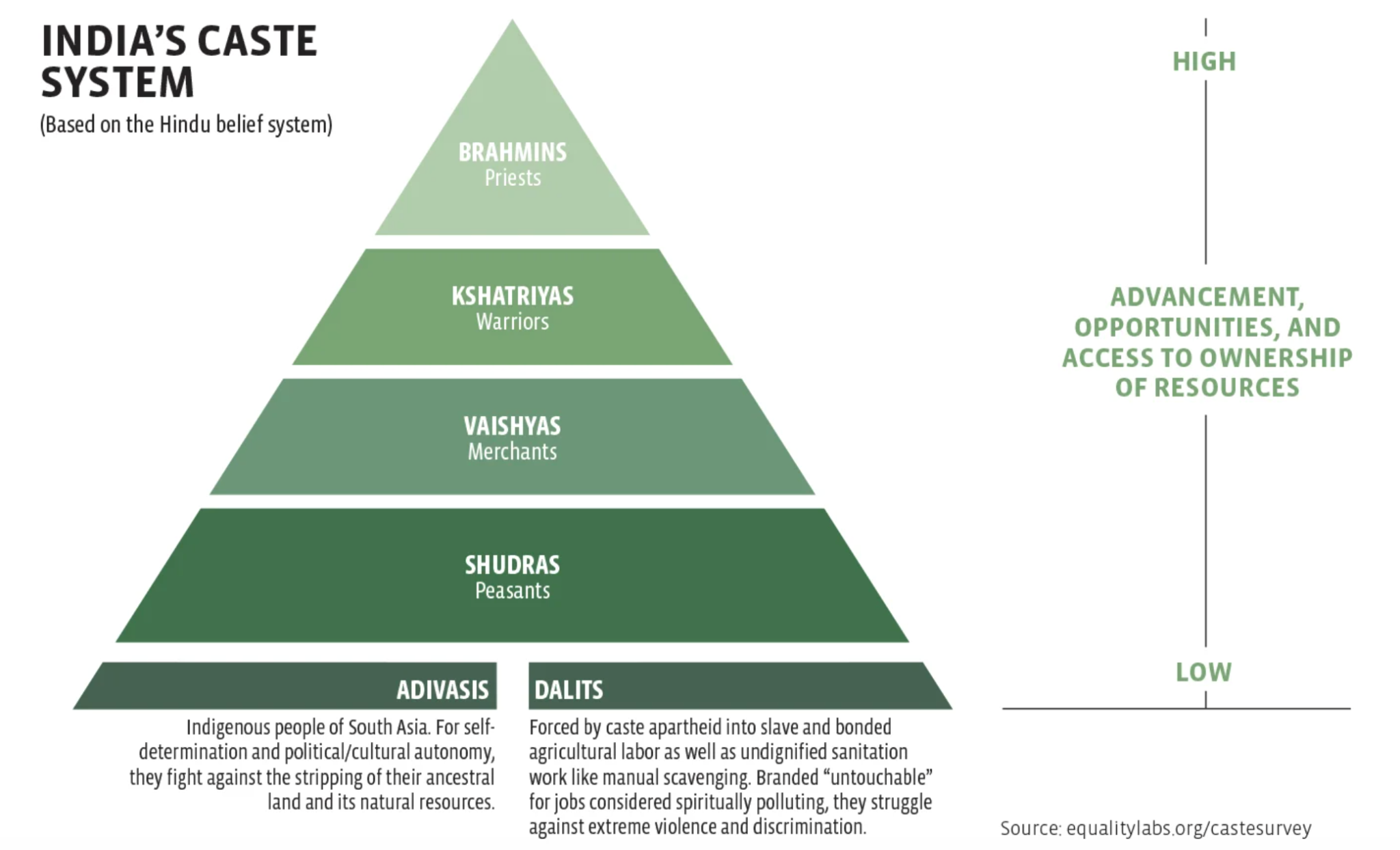
Source: Confronting Caste
Let’s break it down (harder than it sounds)
The task of measuring caste remains as complex and politically charged as the social hierarchy itself, with significant discrepancies between official census data and independent survey findings. Research from The Pew Research Center reveals that while nearly all Indians identify with a caste regardless of their religion, there is no national consensus on the exact size of these groups. This is largely due to methodological divides: the 2011 Census - the latest from India due to many delays — matched self-reported names of castes against state-approved lists—while restricting Scheduled Caste (SC) status to specific religious groups. In contrast, surveys like Pew’s rely on broader self-identification across all faiths, consistently yielding higher estimates for marginalized groups, such as placing the SC population at 25% compared to the official 17%. These measurement differences are far from academic; they sit at the heart of intense debates over reservations—India’s affirmative action system—and the allocation of resources for SC, Scheduled Tribes (ST), and Other Backward Classes (OBC).
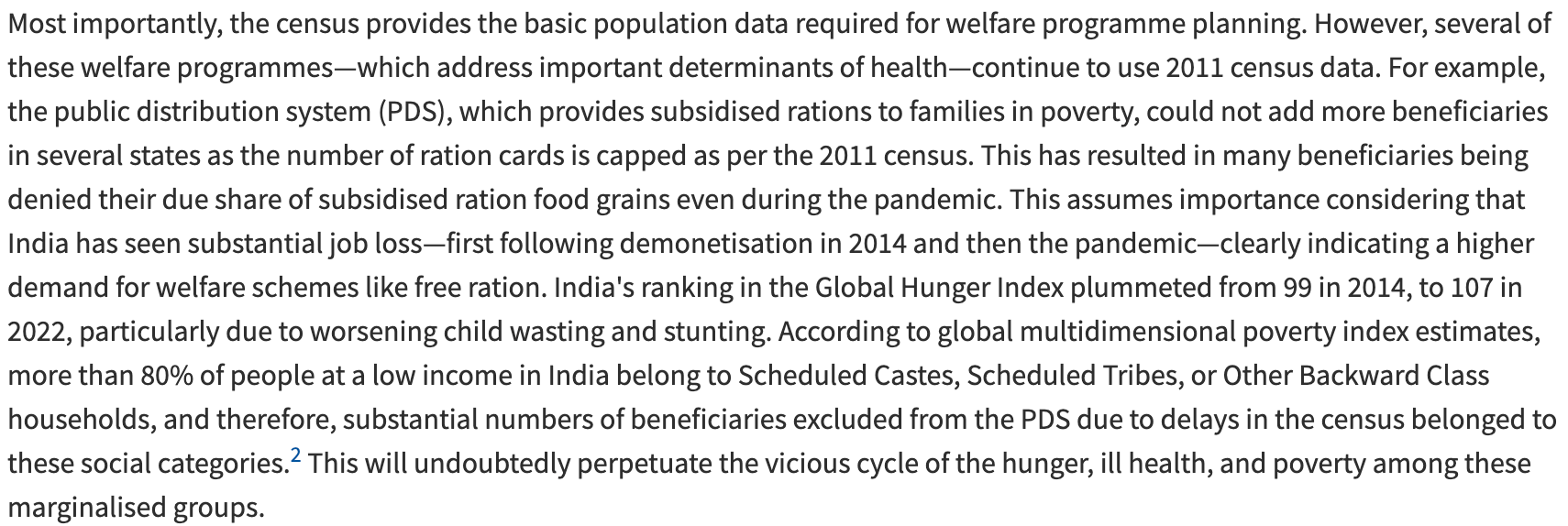
Source: The Lancet
Let’s use the Pew results for the purposes of this Substack, given that multiple religions are also represented compared to the (contested) 2011 Census caste results.
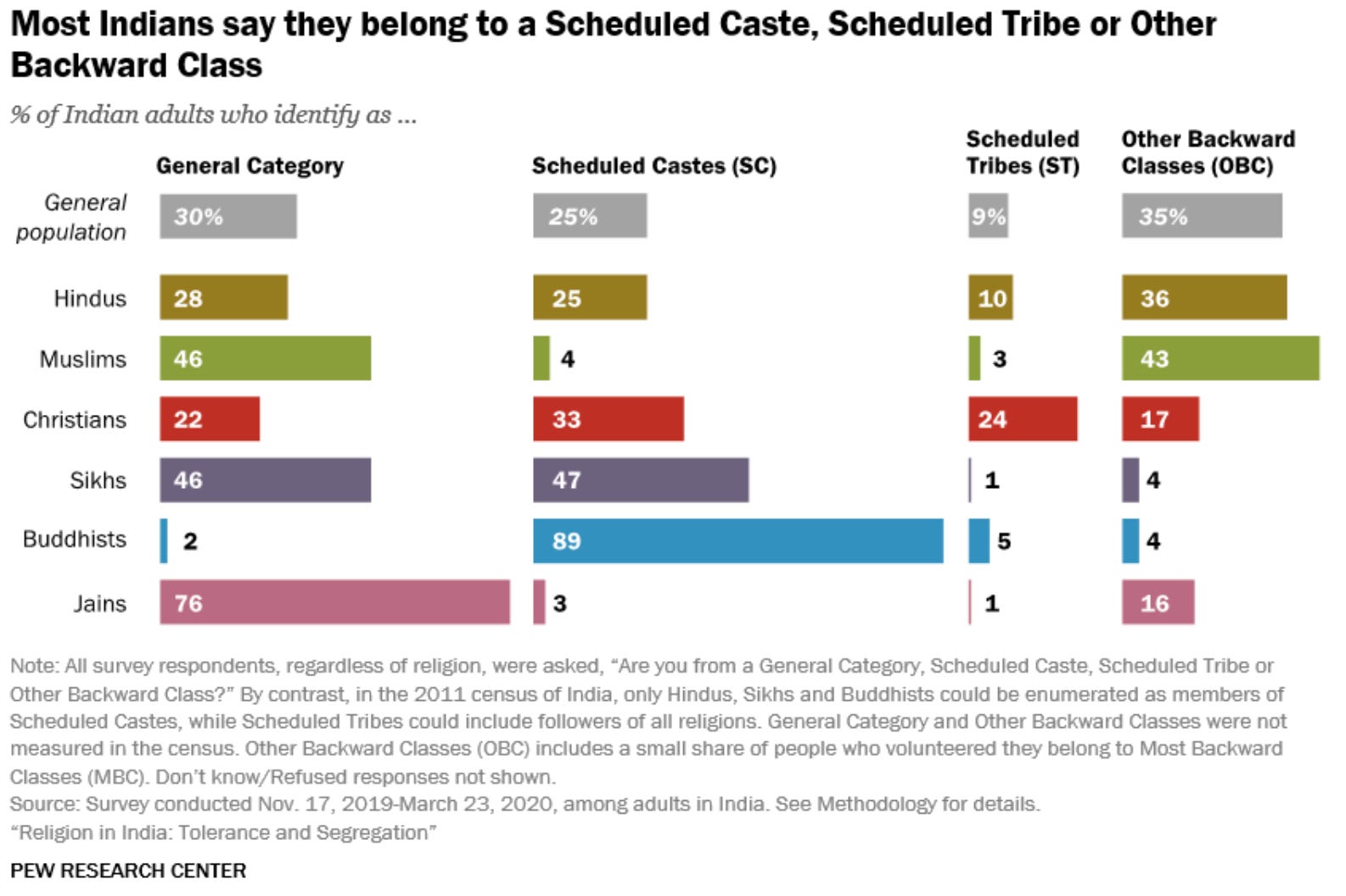
That’s 1 in 3 Indians that are lower caste (SC/ST). As someone from that group - I am a Dalit woman, albeit very very privileged - any story about the ascent of India tends to rankle as it paints broad strokes about the myth of meritocracy and success, because it ignores the growing gulf between who can achieve upward mobility (upper caste, mostly Hindu, men), and those who infuriatingly, cannot and are still frequently violently attacked or killed for even trying.
Caste and development outcomes
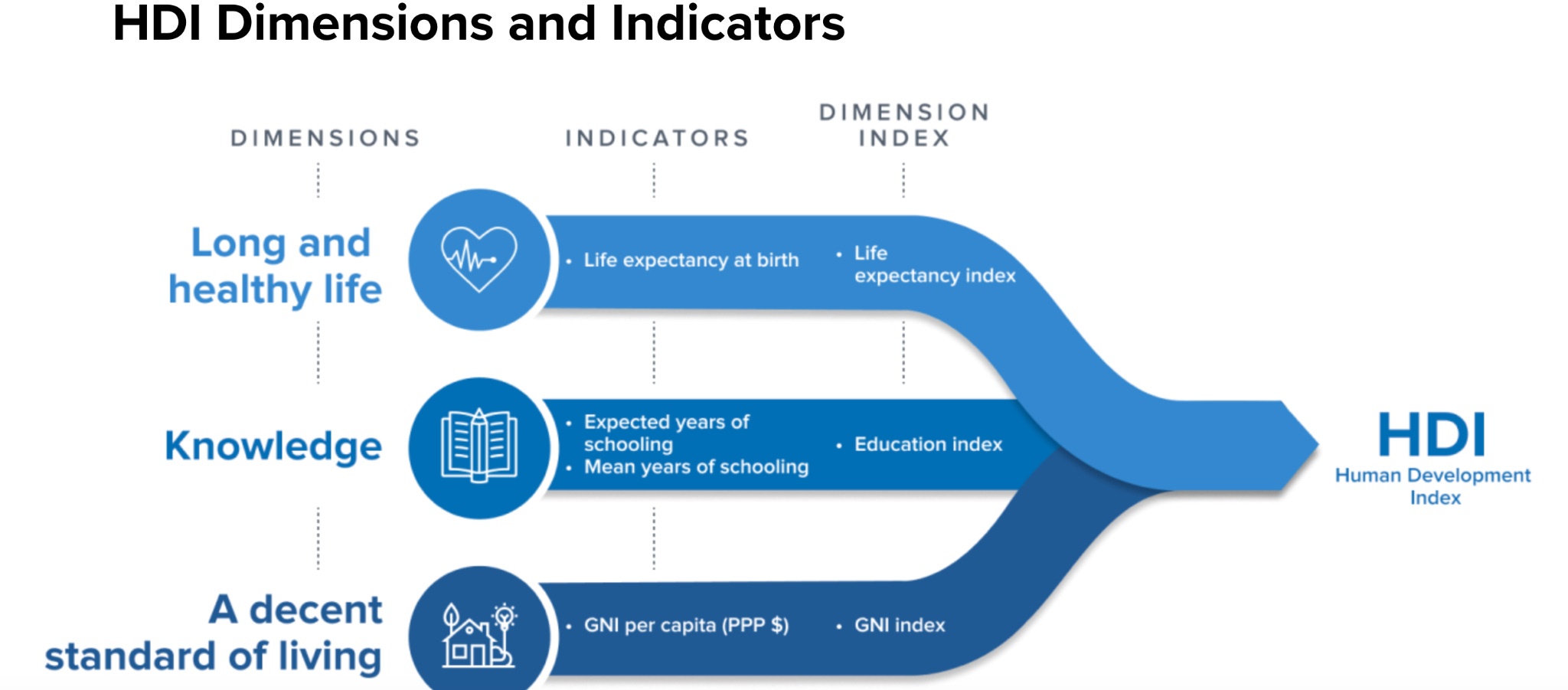
I went back and forth about what all to write in this post. Should I talk about how these massive population numbers are a strain on resources and infrastructure, affect environmental quality, differ wildly state-by-state, and so on. (Reader, It could fill a whole book! Should I write a book!?) I figured - meh - these are somewhat obvious topics when you think of “most populous” and can get unwieldy. I settled on the idea of exploring development outcomes (and disparities) using easily understandable indicators: The Human Development Index (HDI) is key here since most people know about it (or have at least heard of it).
Life Expectancy
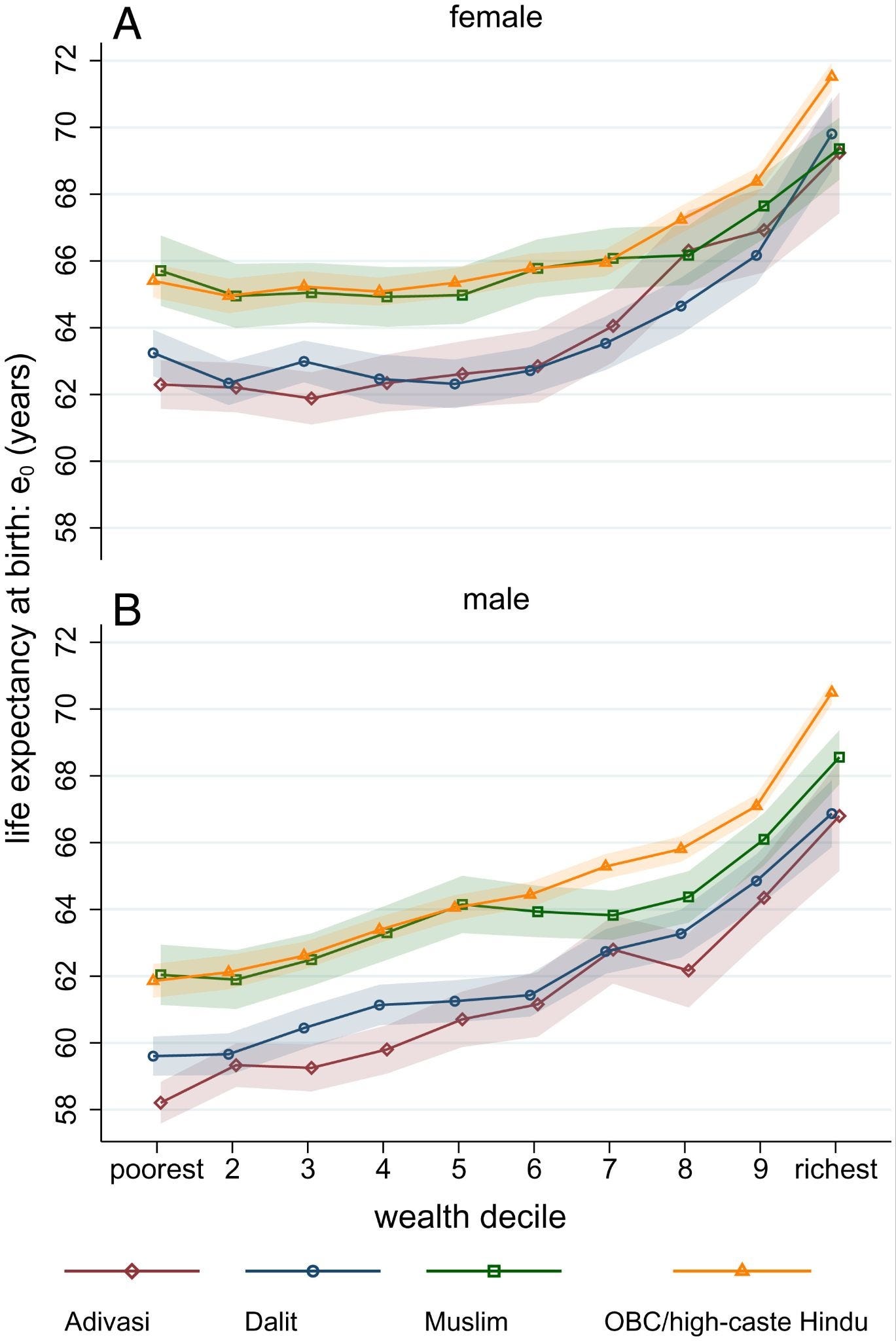
Weeks 5 and 6 of this series focused on Nigeria and Japan under the unifying theme of life expectancy. That sounds like a good place to start digging into how caste and caste-based discrimination plays out in the data. The DD is profoundly fractured by social identity, with caste functioning as a structural determinant of life and death. Building on work that established that the mortality burden in India falls disproportionately on lower-caste groups regardless of geographic location, recent data from millions of households shows that marginalized groups still face staggering life expectancy deficits:
Adivasi (ST) individuals live between four and five years less than higher-caste Hindus;
Dalits (SC) face a deficit of approximately three years.
Crucially, this research highlights that economic status is not the primary driver of this mortality tax; standardizing for wealth and environmental factors explains less than half of these gaps, suggesting that systemic social exclusion and the stress of caste operate independently of a household’s financial resources. This is startlingly shown in the figure below - life expectancy at birth by sex and wealth.
Source: PNAS (Vyas and colleagues)
Ultimately, this collection of research demonstrates how disparities are comparable in magnitude to the Black-White life expectancy gap in the United States, proving that general economic growth alone cannot dismantle the rigid health inequities embedded in the caste hierarchy.
Knowledge
India’s knowledge or education dimension is less a meritocracy and more a reflection of deep-seated social hierarchies. At the foundational level, literacy and school attendance are heavily dictated by caste and religion. While the general population has a functional literacy rate of 79%, this drops to 64% for SC and 59% for ST. Source: Data for India
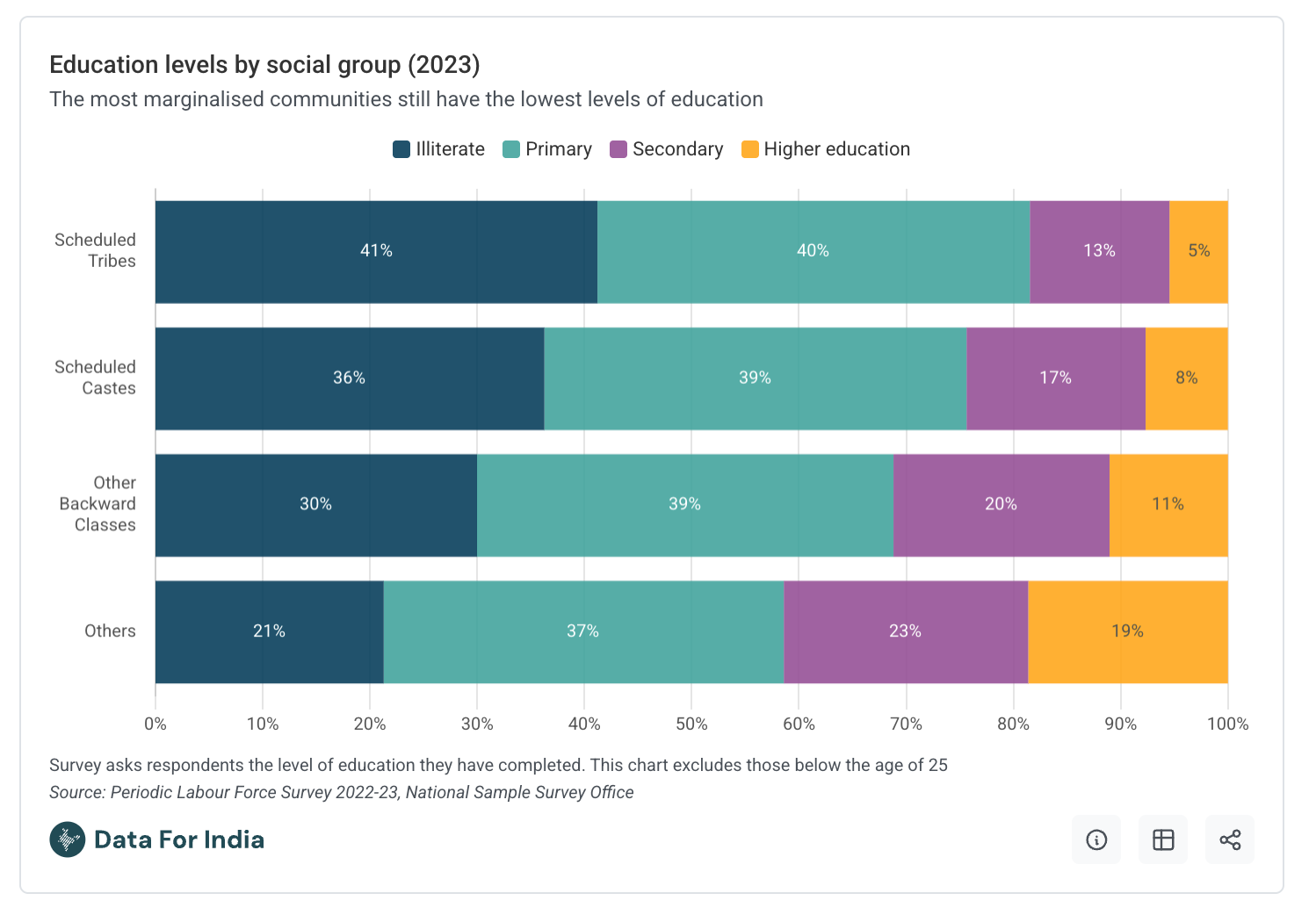
As students move from primary to higher education, the hurdles for marginalized groups become even more pronounced, despite reservations improving access to higher education for marginalized groups. The All India Survey on Higher Education (AISHE) 2021-22 reports a national Gross Enrolment Ratio (GER) of 28.4 (per 100) for the 18-23 age group. However, the aggregate GER masks a steep caste-based hierarchy. For SC students, the GER is 25, and for ST students, it is 21. While these figures represent significant improvements from earlier years, they remain well below the enrollment levels of the general population. The increase in absolute numbers is substantial: SC student enrollment has risen by 44% and ST enrollment by 65% since 2014. Yet, the representation of these groups in Ph.D. programs reveals a lingering gap. While total Ph.D. enrollment has increased by 81%, the conversion of undergraduate enrollment into high-level research remains a challenge for those from marginalized backgrounds. Existing within these realms of higher education as Dalit students is harder still, with some reports of suicide among doubtless others.
The final barrier exists within elite institutions like the IITs and IIMs - institutions that produce some of the top talent in tech and other industries, including many CEOs like Sundar Pichai (Google), Satya Nadella (Microsoft) and others. Here, the concept of merit often masks historical caste privilege. These spaces are dominated by upper-caste families who have accumulated educational capital over generations. The rise of a billion-dollar private coaching industry has further commodified success, making entry into elite tiers disproportionately accessible to wealthy, urban, and upper-caste households. This environment often fosters a caste-blind culture that dismisses affirmative action and labels reserved-category students as intellectually inferior, leading to severe psychological pressure and a reinforcement of the very social divisions the education system is meant to bridge.
A Decent Standard of Living
This HDI dimension is measured by Gross National Income (GNI) per capita adjusted for purchasing power parity (PPP). In India, however, income alone is an insufficient measure of living standards due to the extreme concentration of wealth and the prevalence of non-monetary deprivations. A more nuanced understanding is provided by the Multidimensional Poverty Index (MPI) and the analysis of asset distribution, particularly land and corporate wealth.
While multidimensional poverty fell from roughly 25% to 15% between 2015 and 2021, the top 1% of the population now holds 40% of national wealth, and captured 23% of the national income, a level of inequality surpassing even the British colonial era.
Asset ownership, particularly land, remains the historical anchor of this inequality. Due to long-standing social structures, 71% of SC are landless laborers, and while they make up a significant portion of the population, they own only 9% of agricultural land. In contrast, upper-caste households often own 1.5 times more land than their population share. This disparity extends to the ST group, where land alienation and bureaucratic failures in forest titling keep the intensity of poverty higher than any other social group, with significant deprivations in nutrition and housing.
The labor market further complicates the path to a decent standard of living through systemic wage gaps and glass ceilings. In the private sector—which lacks reservation policies—SC workers still earn 32% less than equally qualified forward-caste peers. Further, 85% of corporate board positions are held by two upper-caste groups, while SC/ST representation remains under 3%. This exclusion is mirrored in the gender pay gap, which is most severe at the bottom of the income scale, suggesting that as skill levels and knowledge requirements rise, informal networking and caste privilege become even more dominant gatekeepers to economic mobility.
Curious about how this bleeds into the diaspora? Read this report (one of many) which highlights how India’s caste system has permeated the American technology sector. It details how Dalit employees often face subtle and overt discrimination from dominant-caste managers and peers, ranging from social exclusion to being blocked from career-advancing projects. My husband works in tech, and his stories make me want to scream. But, I am proud of his acts of resistance - bringing up Dr. Ambedkar whenever he can.
The Weight of 1.4 Billion
Ultimately, India’s status as the world’s most populous nation is a hollow badge if the demographic dividend is only going to be harvested by a narrow sliver of its people. We cannot talk about a new, vibrant India while a third of its population carries a tax simply for the accident of their birth.
When we consider the weight of 1.4 billion, consider the millions stifled by a rigid architectural framework that prefers kinship over true merit. Making these numbers mean something requires more than just GDP growth; it requires a radical reckoning with the structural exclusion that keeps huge populations at the margins.
To lead the 21st century, India must decide if it wants to be a country of a few hundred million winners and a billion onlookers, or a nation where upward mobility is actually accessible to the hands that built it. True ascent cannot be measured by the height of new skyscrapers or the net worth of a handful of CEOs in Silicon Valley. Instead, it is measured by the closing of the gap between the privileged few and the millions still waiting for their humanity to be reflected in the data. Lifting India means lifting everyone, starting with those the system has spent centuries trying to hold down.
The Food!
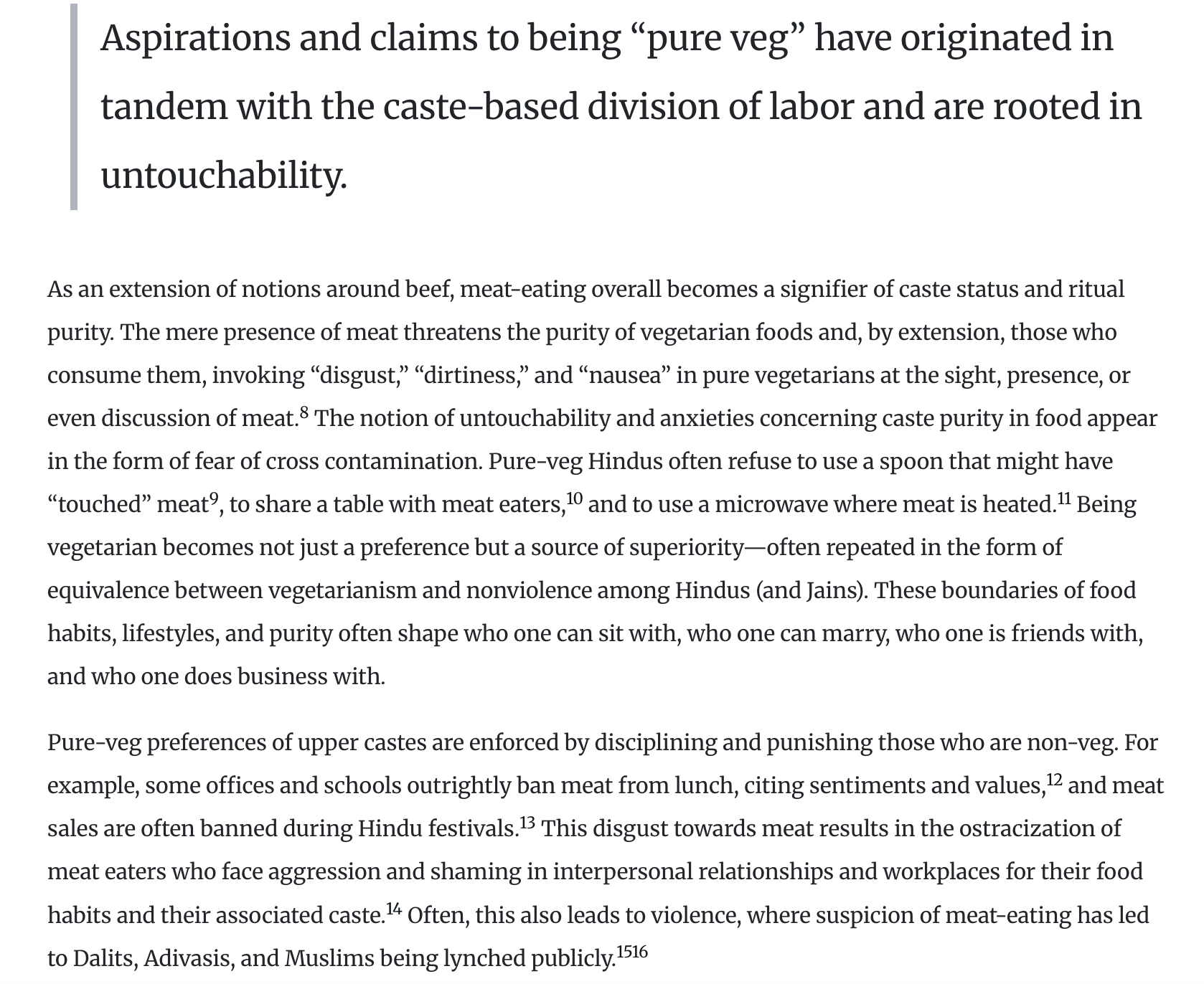
There’s more to say here before diving into the actual food cooked. Despite India’s stereotype as a vegetarian society, ⅔ of Indians are actually non-vegetarian, with many keeping it hidden given social stigma. Yet, the upper-caste ⅓ where vegetarianism is a hallmark of caste purity, sometimes attack those even suspected of eating beef (an affordable protein), and even demand food-delivery vehicles operate separate fleets for their food, lest it become “tainted” by (delicious, succulent) meat. You see now why my “eat/try everything” food stance is also an act of resistance against caste. The irony of a store existing in the US called Brahmin, selling leather handbags, is not lost on me :)
Source: Casteist by Design: How Discrimination Configures India’s Platform Economy
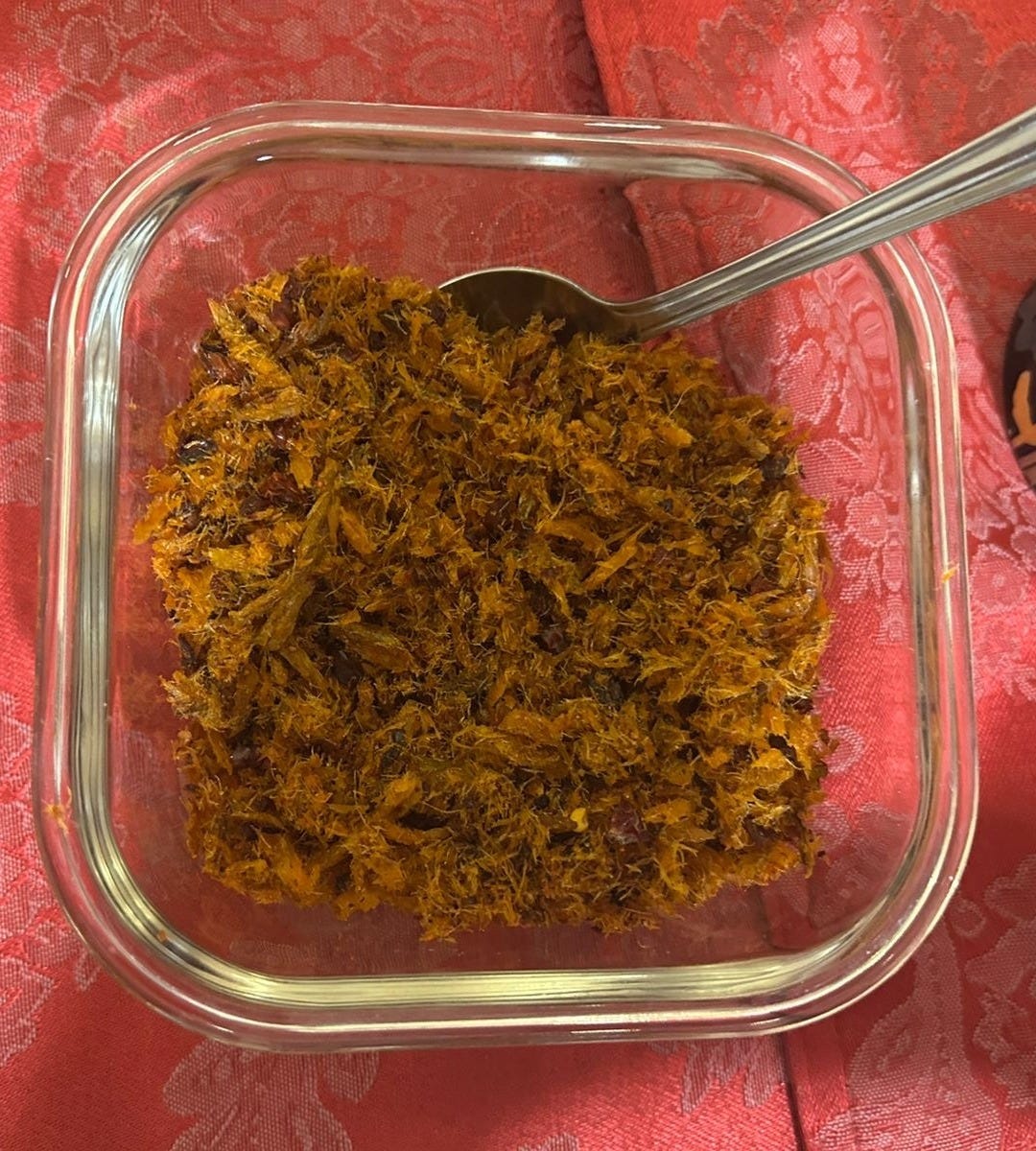
We are away this week because the kids have a school break, so my parents graciously agreed to cook in our stead. When I think of Dalit dishes, a standout one is Bombil Chutney, or dried bombay duck [not a duck, but a fish] made into a chutney. This is a dish that immediately smells and feels like home (my aunts have been known to prepare and pack it for me to bring back to the US too). You can eay it as a condiment with dal/rice/sabzi/chapati.
Here is my mom’s recipe. Enjoy!
Bombil or Bombay Duck is a fish native to India’s West Coast. This fish can be cooked in curries or fried. It’s also dried in the open air near the sea, giving it a salty taste. We are making chutney of the dried bombils.
10 dried bombils,
4/5 dried chilies de-seeded and cut into pieces 6 cloves garlic,
Salt to taste
2 tablespoons oil
Steps:
1. Clean the bombils and cut into 1 inch pieces, wash them thoroughly. Pat dry on paper napkins, keep aside for ten minutes.
2. In a non stick pan, heat 1 tablespoon oil, stir fry the bombils on low flame for 10 minutes stirring frequently. They will become golden and crispy. Remove from the pan and set aside.
3. In the same pan, stir fry the garlic, for few minutes on a low flame until they turn slightly brown, add chilies after a minute turn off the flame. Add to the fried bombils.
4. Once all the ingredients are cooled , transfer them in a blender, add salt, and blend into coarse texture.
5. Before serving add remaining oil in the pan, add the mixture in step 4 ( chutney), and stir fry for 5 minutes on low flame, stirring frequently.
6. Our chutney is ready , can be served with chapatis, or phulkas or pita bread!

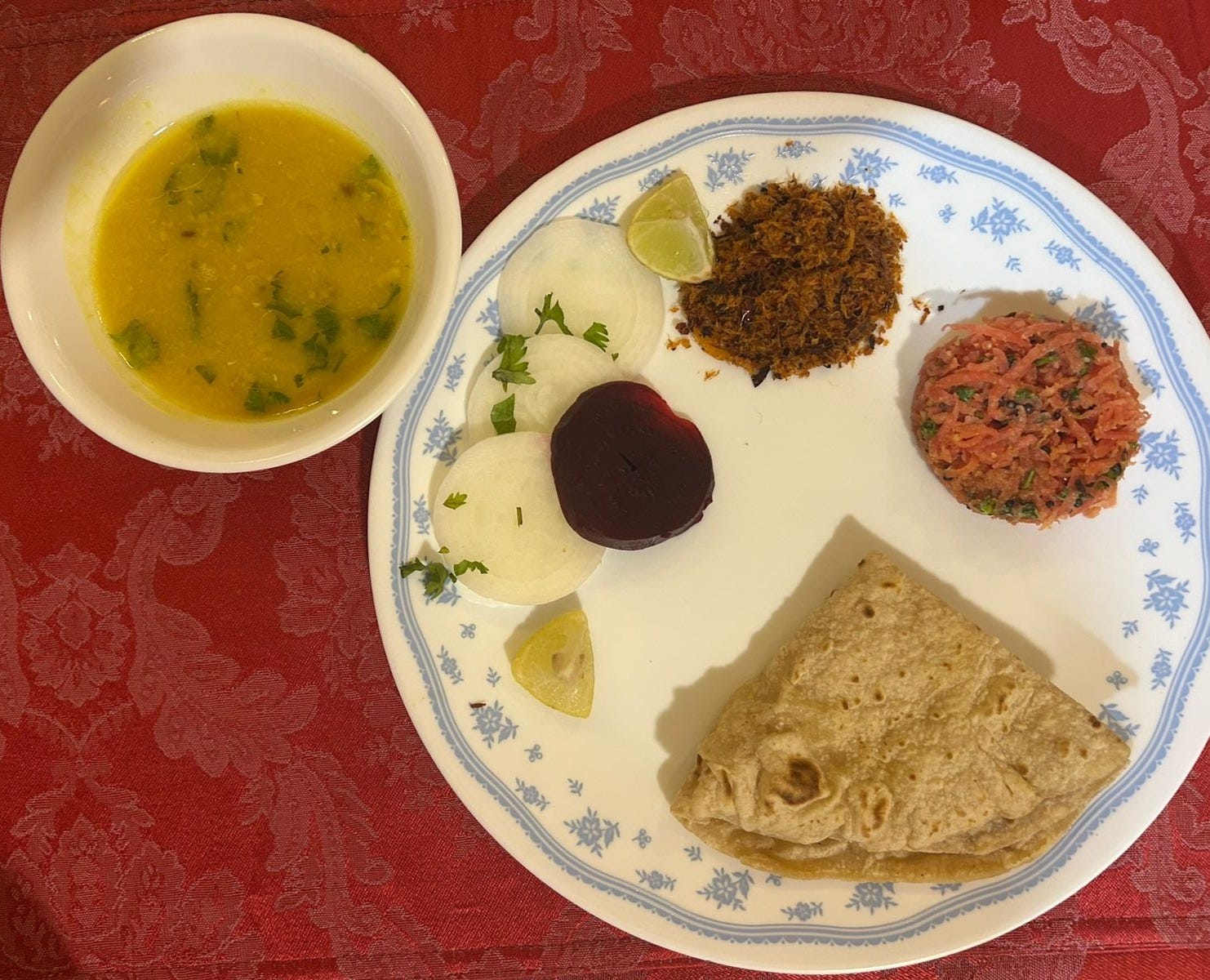
If you are curious about Dalit recipes, this new book is amazing. And if you want to jam to something, I cannot recommend the song Enjoy Enjaami enough, and of course, it’s controversial.
Your reflection on India captures something essential: demographic change is never just about numbers.
When societies move faster than their internal rhythms, identity and long-term decisions quietly recalibrate.
Fertility, migration, family formation — they all respond to whether people experience coherence or instability.
I recently wrote about this from a different angle, looking at young women and structural trust.
Thought-provoking piece.
https://saraeson.substack.com/p/high-functioning-but-unanchored?r=1t83gn&utm_campaign=post&utm_medium=web&showWelcomeOnShare=true